The cradle
A lattice fixed to the back to keep a panel flat, which often did the opposite.
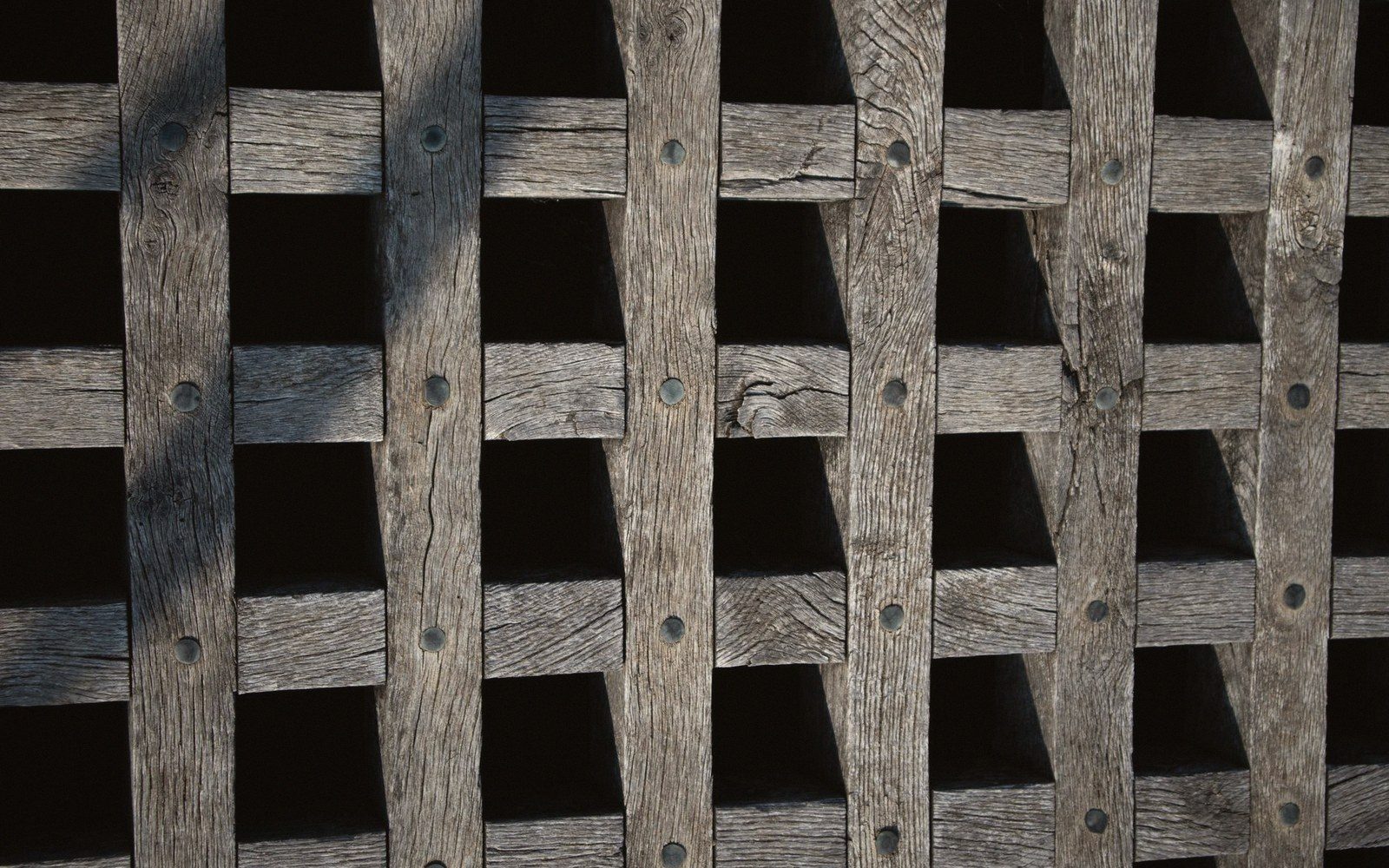
Everything done to the back was done to save the front, and the front ends up recording all of it.
Photo: Iurii Bannov / Pexels
A lattice meant to hold things flat — and what it did instead
The cradle is a grid of wood fixed to the back of a panel: a set of fixed members running with the grain of the panel, crossed by sliding members that run against it. The idea, which became standard practice in many European conservation workshops from the eighteenth century onward, was straightforward. Oak panels move with humidity — they expand across the grain and contract back — and a rigid lattice, the thinking went, might arrest that movement and keep the surface flat.
It is a reasonable idea that turned out to be wrong in almost every case where the panel was old and had already developed its own habits.
The fixed members are glued directly to the back of the panel, usually running parallel to the grain. The sliding members — the cross-pieces — pass through channels or slots routed into the fixed members, so that theoretically they can ride with seasonal movement while the fixed members hold the shape. In practice, the sliding members seize. Dust, grime, old consolidants, and the cumulative creep of the wood itself bind them in place over decades. Once fixed, every cross-piece becomes a rigid bar fighting the panel's natural expansion and contraction across its width. The result can be worse than leaving the panel alone: oak never stops moving, and when you stop it by force, the energy of that movement has to go somewhere. It goes into the paint layer.
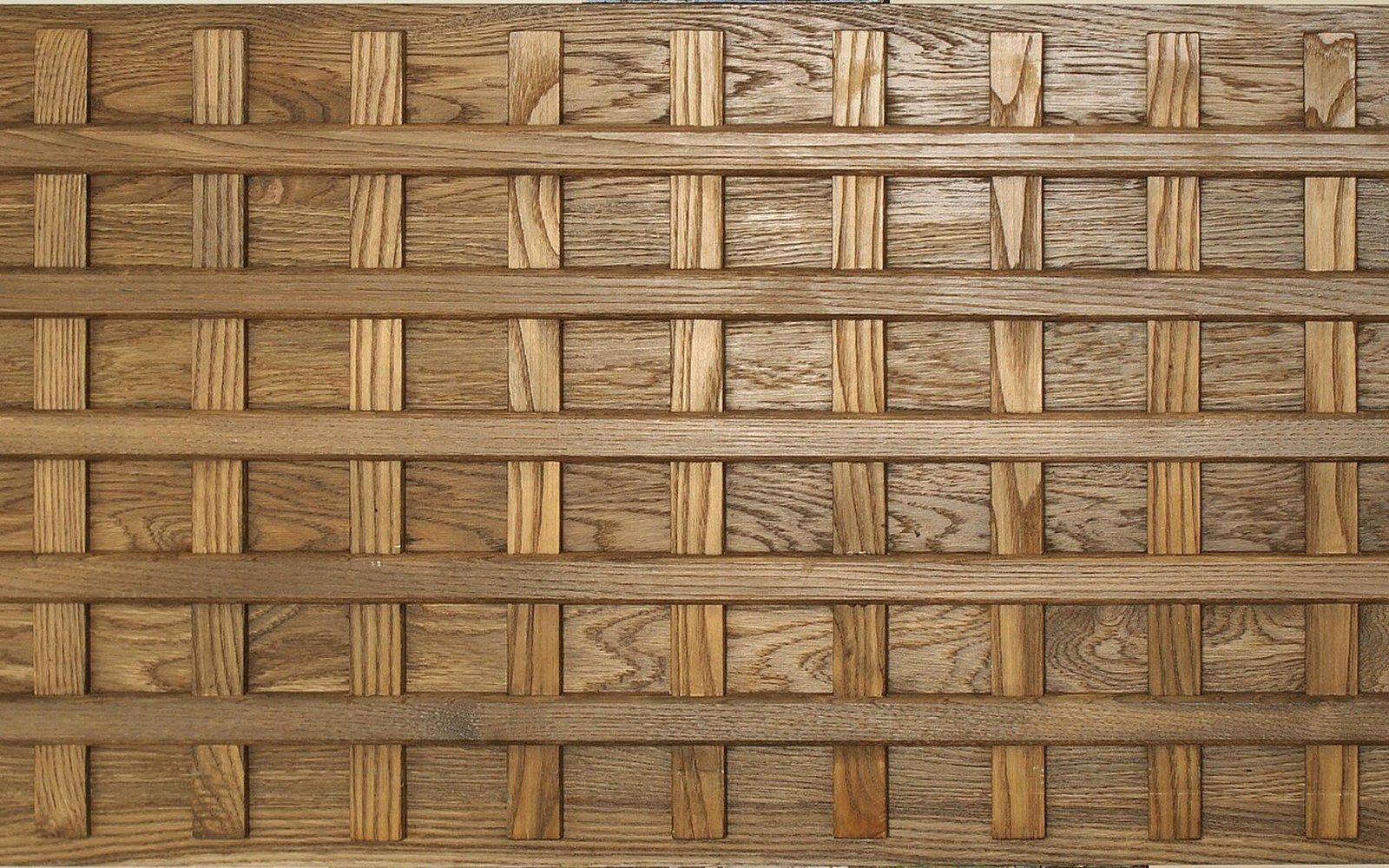
Fixed members one way, sliding members the other. When the sliding members seize, the lattice stops guiding the board and starts clamping it.
Photo: Доска для живописи с дубовым паркетажем · Wikimedia CommonsThe consequences show up in several ways. Cupping — the characteristic curling of a panel across the grain — can be arrested on one face by the cradle while the obverse continues to respond to humidity, driving the wood into tension. Splits open along the grain, often at old joins, because the panel cannot accommodate its own movement. The ground and paint layer, caught between an immovable lattice and a wood that insists on moving, begin to lose adhesion. What the cradle was installed to prevent, it frequently accelerates.
Cradling also thins what it is attached to. Fitting the fixed members neatly to a curved or uneven back almost always involved thinning the panel first — planing or scraping the reverse to a flat, even surface that the lattice could be glued against. Thickness carries structural rigidity, and removing it made the panel more responsive to atmospheric change, not less. The cradle was then fixed to a support already weakened by the preparation for it.
Reading a cradled panel in raking light tells you a great deal. The fixed members often create a corrugated effect on the face: the wood between the glued strips has continued to respond to humidity while the wood directly beneath each strip is held, producing a series of low ridges and hollows that run the length of the panel. These ridges track the cradle's positions exactly, and once you know what you are seeing, the pattern is unmistakable. Crack networks, too, frequently concentrate at the edges of each fixed member, where the boundary between restrained and unrestrained wood creates a stress line.
The cradle is a grid of wood fixed to the back of a panel: a set of fixed members running with the grain of the panel, crossed by sliding members that run against it.
Removing a cradle is never simple. The adhesive used — most often animal hide glue, sometimes a later synthetic — may have penetrated the wood fibres at the glued interface. Forcing the fixed members off risks taking splinters of the original panel with them, and if the wood is already fragile or the paint layer vulnerable, the risk multiplies. Many panels carry cradles that conservators would prefer to remove but cannot, not safely, not yet. The decision is held open, usually in favour of environmental stability — controlling humidity rather than fighting the panel mechanically.
The cradle was not a malicious intervention. It reflected a genuine and logical concern about panels that were splitting, cupping, and losing paint. The workshops that fitted them were trying to solve a real problem. What they underestimated was the wood's persistence: the extent to which a four-hundred-year-old oak panel, however battered, still behaves as living wood, reading every change in the air and responding accordingly. A lattice does not persuade it otherwise. It only changes where the damage appears.
What the cradle is made of
Lifted out of the piece| Fixed members | strips of wood glued parallel to the panel's grain; they do not move |
| Sliding members | cross-pieces that pass through routed channels; designed to float, usually seized |
| Hide glue | the typical adhesive at the glued interface; penetrates wood fibres and is hard to reverse cleanly |
Two boards glued edge to edge. The glue is meant to be the weakest part of the assembly.
Photo: Digital Buggu / PexelsWhat goes wrong
Lifted out of the piece- Seized cross-pieces become rigid bars fighting seasonal movement across the grain
- Corrugated ridges on the paint face: the panel between strips moves; the panel beneath each strip does not
- Crack networks concentrated at the edges of the fixed members, where restrained and free wood meet
- Thinning the panel before cradling reduced the rigidity the cradle was supposed to restore