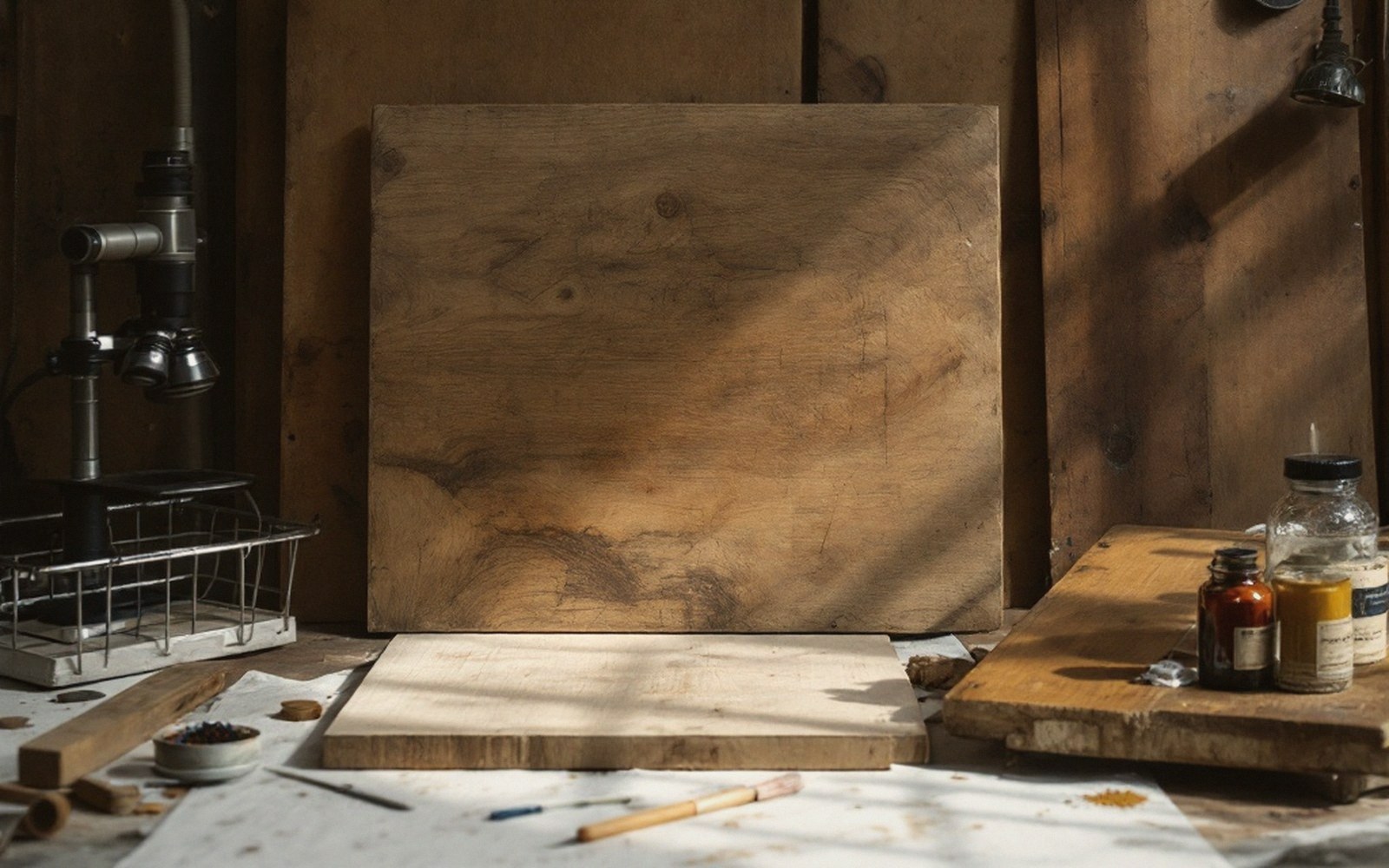
Everything done to the back was done to save the front, and the front ends up recording all of it.
Photograph supplied.
What the back carries
The paint surface gets the attention, but turn a panel around and the wood often speaks more plainly. Panel-makers in the Low Countries worked within guild systems, and some boards carry a brand or brand-like stamp — an antwerp hand, a city mark, a maker's monogram burned or struck into the oak — that records where the timber was prepared and by whom. These are not decorative: they were quality guarantees, and finding one still legible under later accretions is a minor archival event.
Collection stamps arrive later in a panel's life, pressed in red or black ink, sometimes wax: the crowned initials of a royal inventory, the oval cartouche of a nineteenth-century dealer, the stencilled number of a German Kunstschutz survey during the Second World War. Each layer of ownership leaves its mark, and together they form a provenance chain far more reliable than any verbal tradition, because nobody thought to forge the back. Old inventory numbers, written in chalk or ink directly onto the wood, are particularly useful: cross-reference the number to a surviving ledger and the panel acquires a location and a date. Cross-reference two numbers and sometimes a theft or a sale sharpens into focus.
Conservation labels are part of the record too — strips of paper fixed by a previous restorer noting a treatment date, a lining adhesive, a crackle consolidation. Respect them even when they document something regrettable. They tell you what was done before you arrived, and removing them without transcription destroys irreplaceable information.
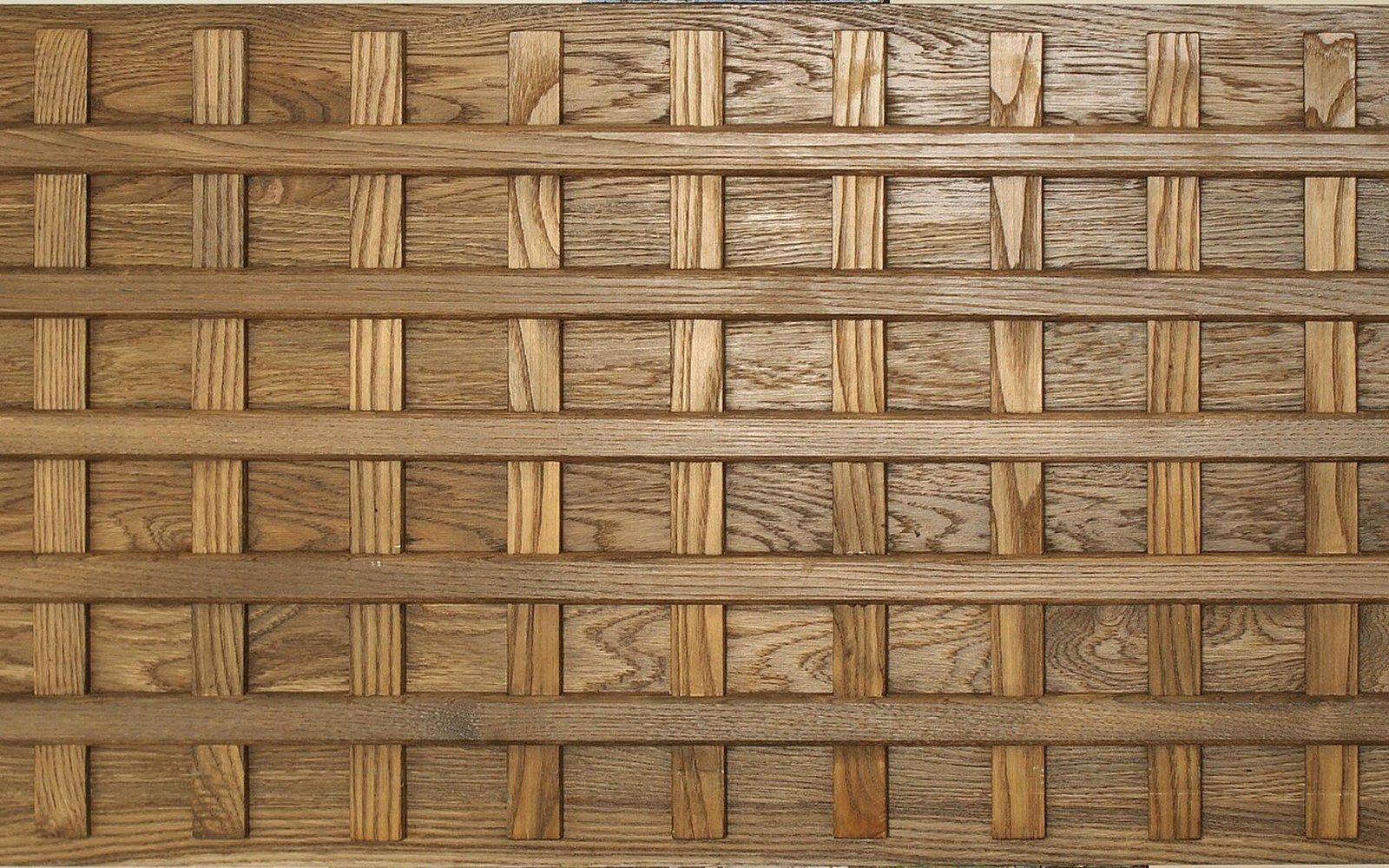
Fixed members one way, sliding members the other. When the sliding members seize, the lattice stops guiding the board and starts clamping it.
Photo: Доска для живописи с дубовым паркетажем · Wikimedia CommonsRaking light across the back reveals tool marks: the adze or plane strokes left when the board was thinned, sometimes the ghost of a batten channel cut when someone decided flatness was worth the structural price. Thinning a panel was once routine; the evidence of exactly how it was done is preserved on the reverse, nowhere else.
Read the back first. Then turn it over.
The paint surface gets the attention, but turn a panel around and the wood often speaks more plainly.
What the marks mean
Lifted out of the piece| Panel-maker's brand | a guild-regulated quality stamp burned or struck into the board, recording origin and preparation |
| Collection stamp | inked or wax impression added by successive owners; often the most reliable provenance evidence surviving |
| Inventory number | chalk, ink or stencil applied by a collection administrator; cross-referenceable to historical ledgers |
| Conservation label | paper record fixed by a previous restorer; documents treatment history and should be transcribed before any removal |
| Adze/plane marks | tool traces on the back surface revealing how and whether the panel was thinned |
Two boards glued edge to edge. The glue is meant to be the weakest part of the assembly.
Photo: Digital Buggu / Pexels