The blue problem
Two pigments that did not hold: smalt fades to grey, azurite turns green — and neither failure is what it looks like.
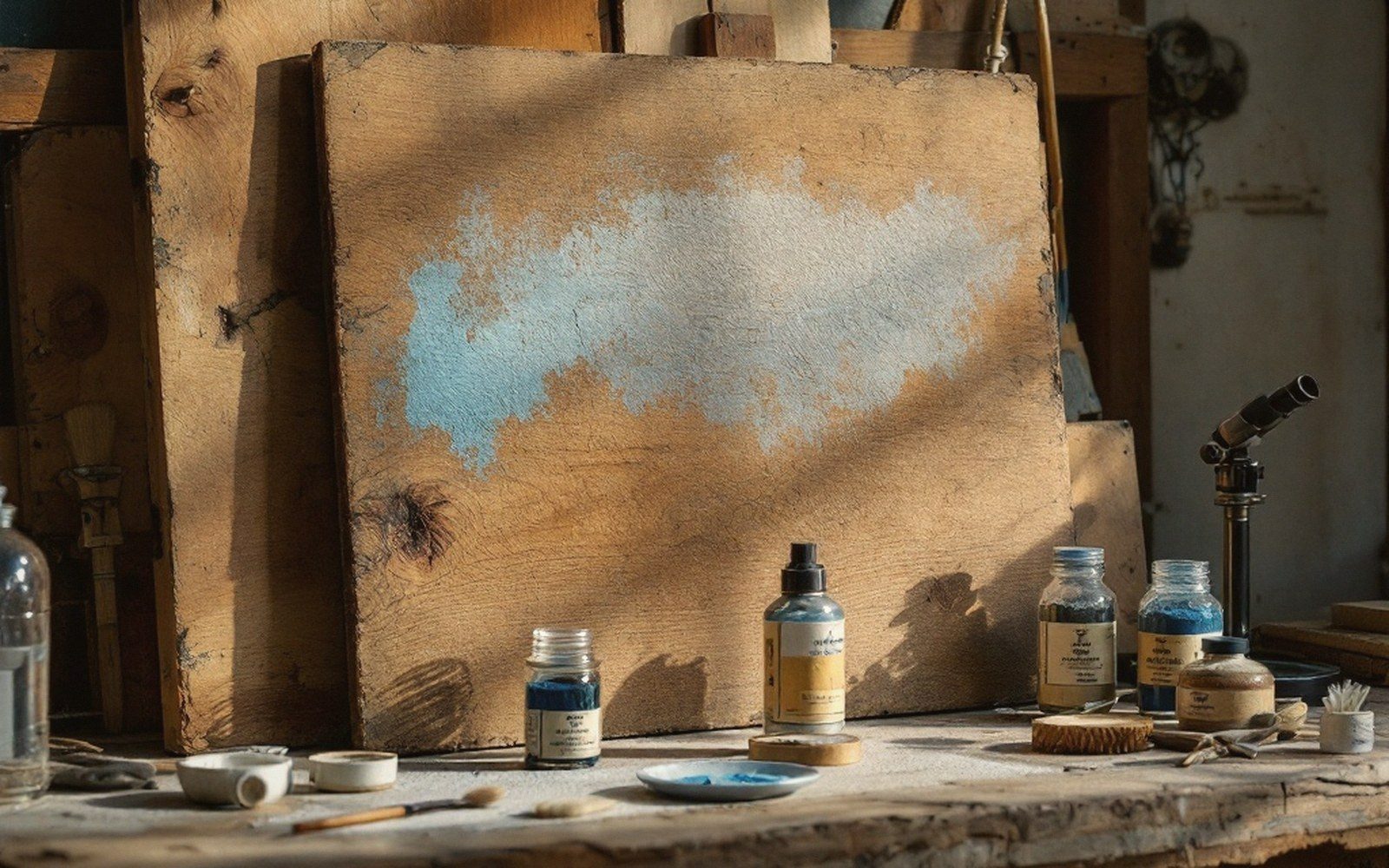
Paint was built up in thin passes, each one relying on the layer beneath it to do part of the work.
Photograph supplied.
Why Blues Are Liars
Look at a sky in a Dutch panel painting and you may be seeing the wrong colour entirely. Not because the painter was wrong, but because two of the most common blue pigments used before ultramarine became widely affordable are chemically unstable in ways that took centuries to understand.
Smalt is glass — cobalt-rich potassium glass ground to a powder. It was cheap, available, and in the sixteenth and seventeenth centuries it appeared in Dutch and Flemish skies, distant hills and costume shadows constantly. Ground finely, it makes a beautiful cool blue. Left in oil for four hundred years, it fades. The cobalt ions migrate out of the glass matrix as the binding medium degrades around the particles, and what remains is a grey-brown haze — sometimes barely distinguishable from a wash of lead white. A sky that reads as overcast may once have been a brilliant afternoon. The deeper the original colour, the more complete the loss can appear, because thick applications of smalt were often laid without the pale underlayer that survives to signal that anything was once there.
Azurite behaves differently. This is a basic copper carbonate — the blue ore often mined alongside malachite — and its problem is not fading but conversion. In the presence of moisture, fatty acids from linseed oil, and certain sulphur compounds, azurite slowly transforms toward malachite or copper soaps, shifting from blue toward green. Passages that were intended as rich blue shadows in foliage, or the cool blue-grey of a winter sky, sit today with an unmistakable green cast. Technical analysis of multiple Flemish panels has confirmed the shift; what painters mixed as a cool blue the eye now reads as a warm green.
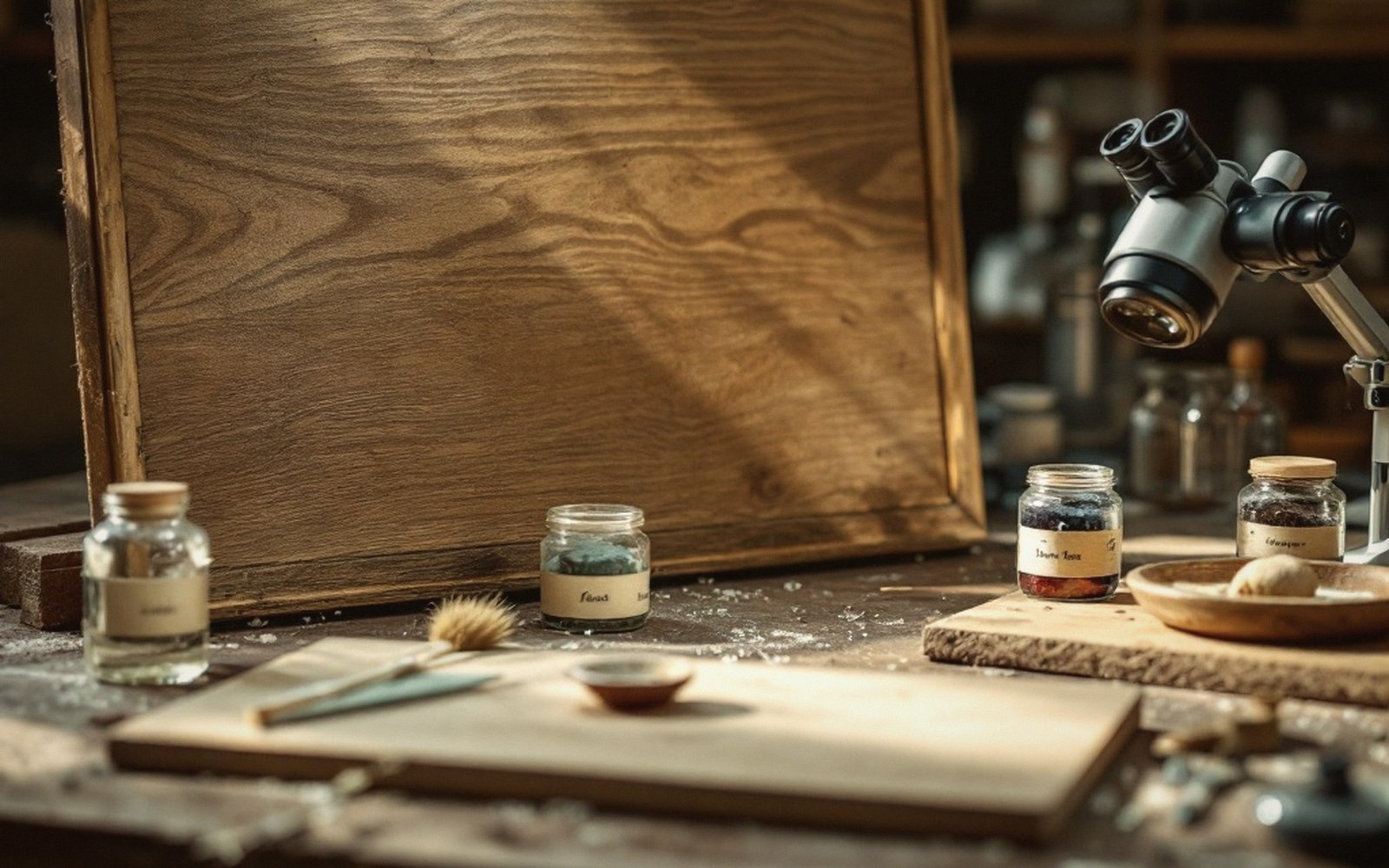
What a conservator can match is limited by what is in the jars, and by what the original was.
Neither failure is visible to the naked eye as damage. There is no flaking, no craquelure, no obvious loss. The paint surface is smooth and apparently intact. That is the diagnostic trap: X-ray fluorescence and cross-section microscopy can identify smalt and azurite unambiguously where visual inspection offers no hint that anything has changed. Conservators dealing with yellowed varnish at least have a layer they can consider removing; the colour shift in smalt and azurite is inside the paint film itself and entirely irreversible.
What this means in practice is that the relationship between tone in a surviving panel and the painter's original intentions may be profoundly distorted in the cool register above all. Trust the warm colours. Treat the greys and greens with suspicion.
It was cheap, available, and in the sixteenth and seventeenth centuries it appeared in Dutch and Flemish skies, distant hills and costume shadows constantly.
What changed, and how we know
Lifted out of the piece| Smalt | cobalt-rich glass pigment; fades to grey-brown as cobalt ions migrate from the glass matrix |
| Azurite | basic copper carbonate; converts toward malachite or copper soaps, shifting from blue to green |
| X-ray fluorescence (XRF) | identifies elemental composition; confirms pigment identity where the eye sees only grey or green |
| Cross-section microscopy | a sliver of paint viewed in transmitted and reflected light, showing layer sequence and pigment particles |
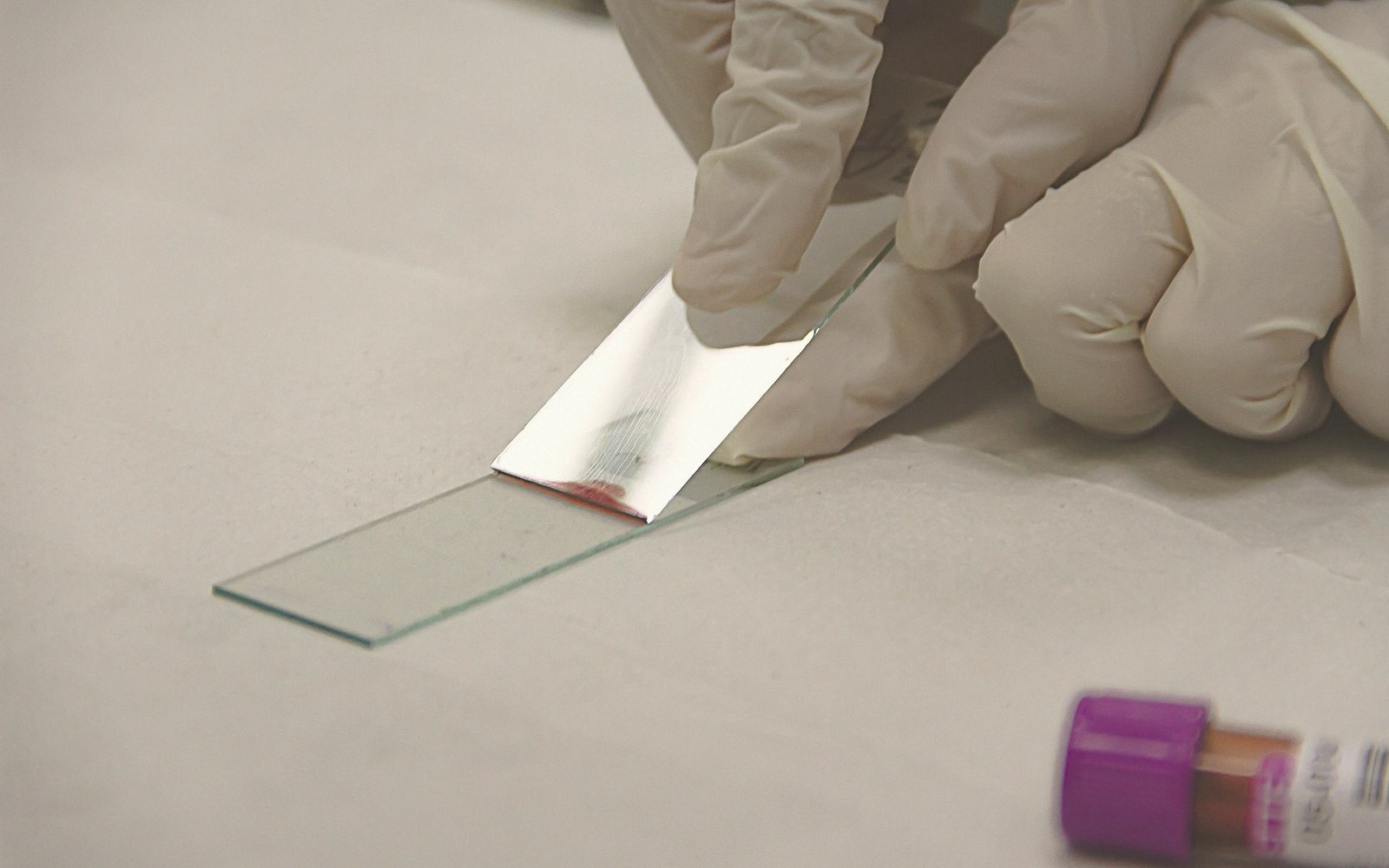
A sample the width of a hair, set in resin and polished, holds the whole build order in view at once.
Photo: roberto carrafa / Pexels