Glazes are built thin
Depth without mass: the transparent layers laid over a light ground that gave Flemish and Dutch painting its luminous interior.
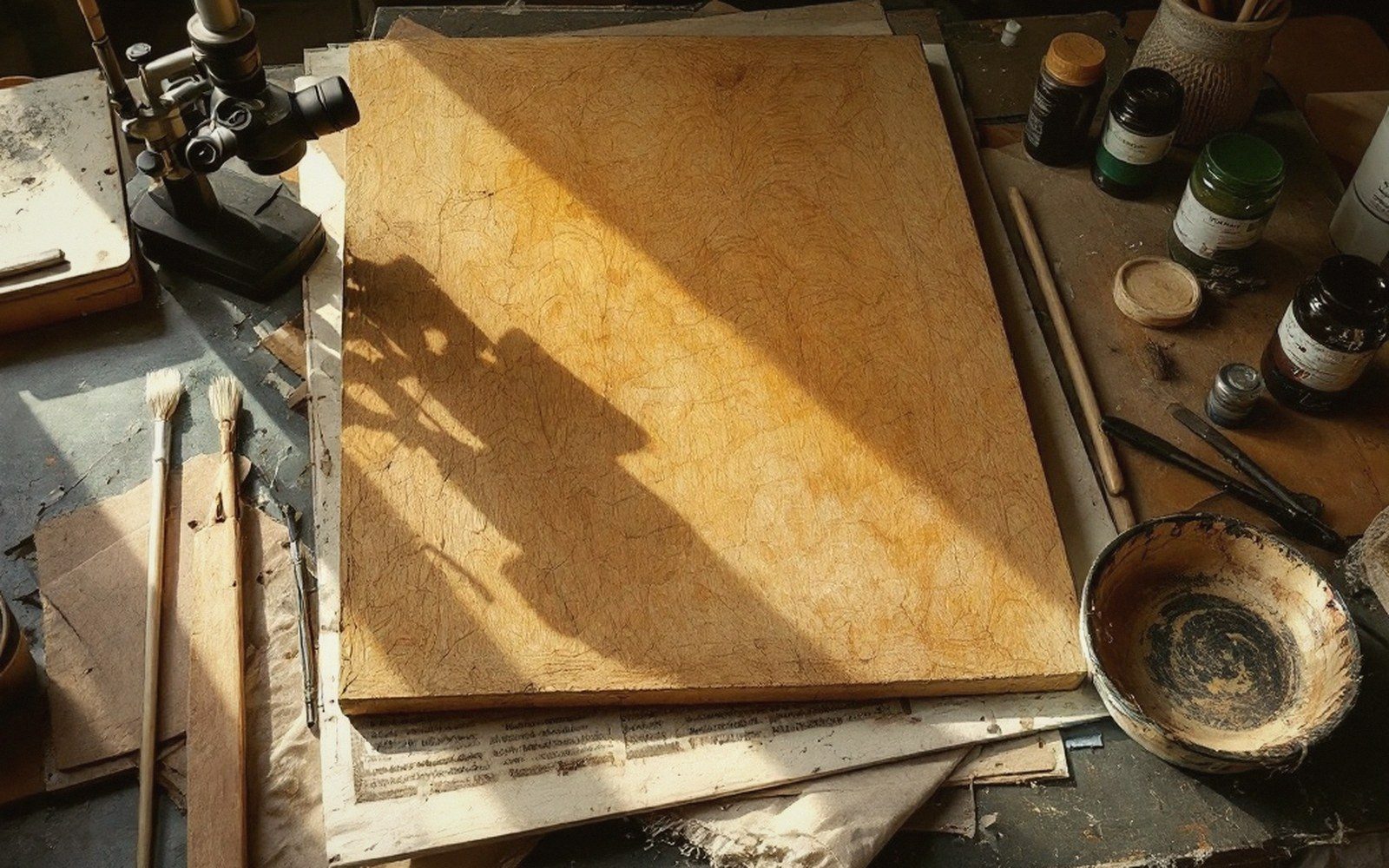
Paint was built up in thin passes, each one relying on the layer beneath it to do part of the work.
Photograph supplied.
The logic of thin
A glaze is paint reduced to near-transparency — pigment suspended in oil, applied in a layer thin enough that light passes through it, strikes the lighter surface beneath, and returns upward through the colour. That returning light is what makes a glazed passage glow in a way that opaque paint simply cannot. It is not a trick; it is physics, and Flemish and Dutch painters understood it empirically long before anyone had the language to describe it.
The ground underneath matters absolutely. Chalk bound in animal-skin glue — the standard preparation on Northern European oak panels — dries to a surface close to white. Because chalk is calcium carbonate, it is genuinely reflective, not just pale. Light that enters through a glaze of transparent red or brown bounces back through that same layer, doubling the optical path. Deepen the ground with an imprimatura, a thin toned underlayer often warm grey or brown, and the glaze reads differently again: cooler, more complex, slightly veiled. The painter was composing with light-return before a single visible stroke was applied.
Glazes came late in the sequence. First, the underdrawing — quill, brush or chalk, depending on the workshop. Over that, the dead colour: a monochrome or near-monochrome underpainting in lead white and black or umber that established volume and value without committing to hue. Then the local colour in opaque paint, often mixed with lead white to push lights forward. The glazes arrived last, enriching shadows, saturating colour, unifying transitions. Removed from that sequence, a glaze is nothing — a smear. In it, that same smear becomes depth.
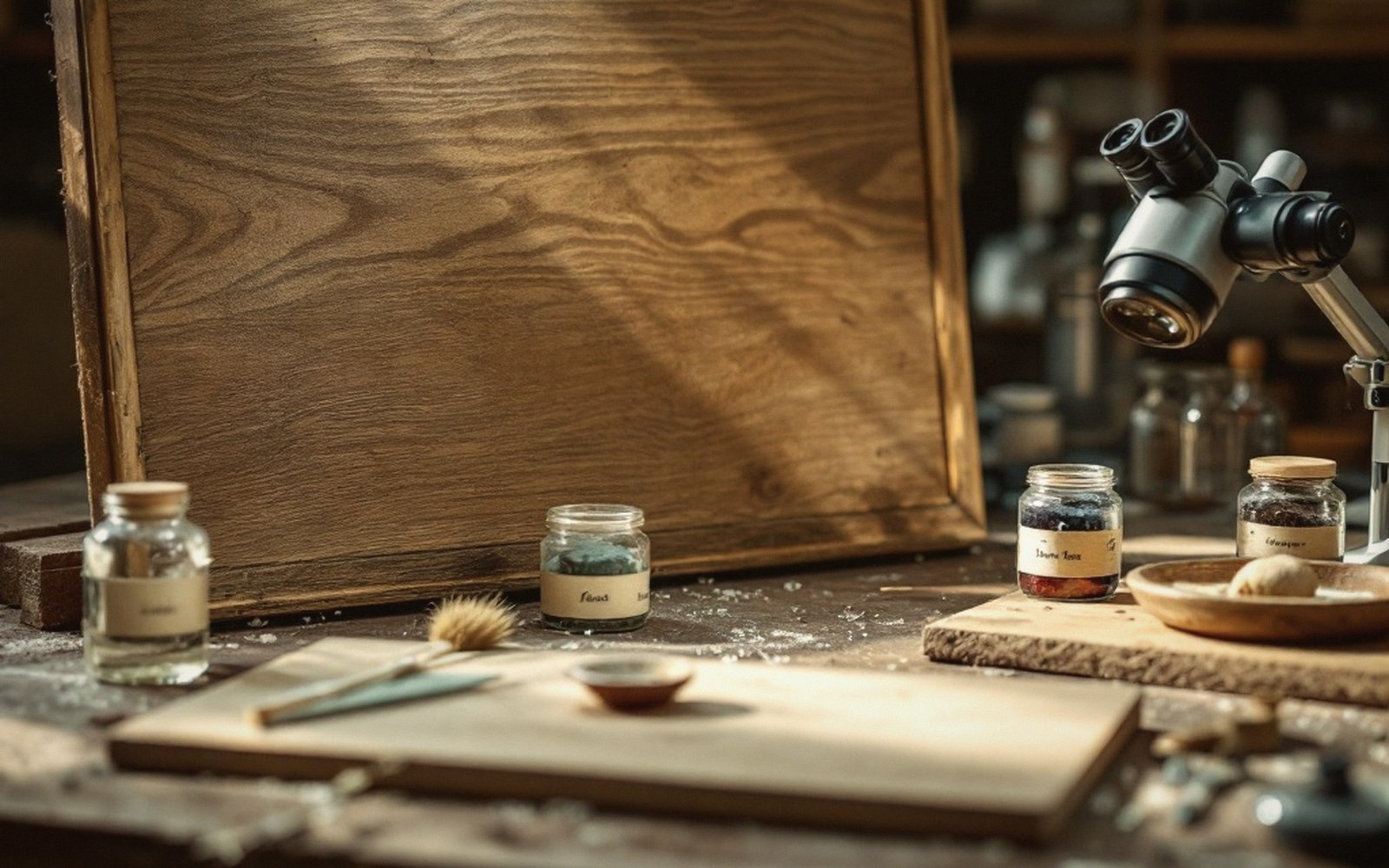
What a conservator can match is limited by what is in the jars, and by what the original was.
What makes a pigment glaze
Not every pigment can be glazed. A glaze requires transparency in the film, and that depends on both particle size and the relationship between the pigment's refractive index and the oil's. Lead white is too opaque; smalt becomes translucent but loses colour over time. The glazing pigments in the Northern European palette were a specific set: madder lake, derived from the root of Rubia tinctorum, precipitated onto an alum substrate; bone black used thinly for cool shadows; brown glazes from burnt umber or Cologne earth; and resinous yellows made from buckthorn berries or weld. For deep, saturated reds over a light ground, nothing before the modern era matched a well-made madder lake glaze in linseed or walnut oil.
Vermilion, the opaque red, was not a glazing pigment — but painters often glazed madder over it, softening its harsh edge and pushing it toward crimson. That pairing, opaque body colour beneath and transparent glaze above, is one of the recurring structures you can learn to read on a cleaned panel: the vermilion sits bright and slightly chalky on its own; the combination deepens and the surface quiets.
What four centuries do to it
Time is unkind to glazes in specific ways. The oil medium yellows, shifting warm browns and reds toward orange, cooling blues toward green — the yellow distortion is worst in passages where there is little to counteract it. Varnish adds another yellowing layer on top, compounding the shift. When conservators remove old varnish, glazed passages sometimes read as revelations: colours return that the painting had not shown for generations.
But glazes are also vulnerable to cleaning. A glaze layer — already thin — sits near the surface of the paint film. If a solvent used in cleaning is left in contact too long, or if it is slightly stronger than the situation requires, a glaze can soften and lift on the swab. What comes away looks like dirt because at that scale the material is nearly colourless. You only know it is gone when the shadow has lost its depth and the painter's modelling has flattened. This is one of the central tensions of panel conservation: the same transparency that makes a glaze beautiful makes it fragile. The conservator working toward bare paint is, at every stroke, working one step away from the layer that gave the image its richness, and there is no putting it back.
That returning light is what makes a glazed passage glow in a way that opaque paint simply cannot.
Art In Red Light is an independent publication about painting materials and conservation. It is not a museum, gallery, dealer or conservation service.
How the sequence worked
Lifted out of the piece| Chalk ground | reflective white preparation, calcium carbonate in animal-skin glue |
| Dead colour | monochrome underpainting establishing volume |
| Local colour | opaque paints, often mixed with lead white |
| Glaze | transparent final layers enriching shadow and saturating hue |
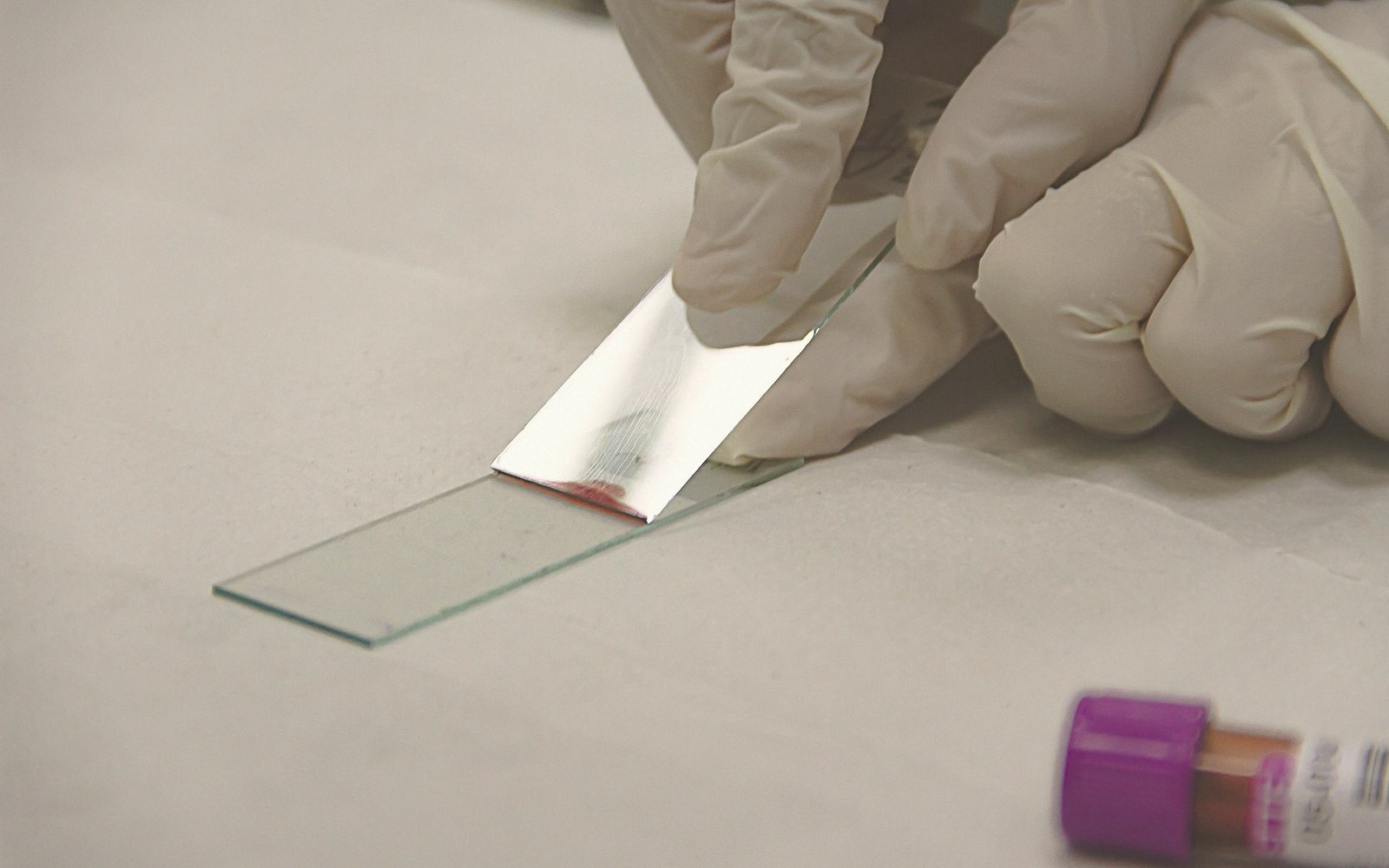
A sample the width of a hair, set in resin and polished, holds the whole build order in view at once.
Photo: roberto carrafa / PexelsPigments that glazed and pigments that didn't
Lifted out of the piece| Madder lake | the premier transparent red; precipitated from Rubia tinctorum root onto an alum base |
| Smalt | glazes thinly but fades over time |
| Lead white | too opaque to glaze; body-colour only |
| Burnt umber / Cologne earth | warm transparent browns |
| Vermilion | opaque red, often partnered with a madder glaze above it |
| Weld / buckthorn | transparent yellows |