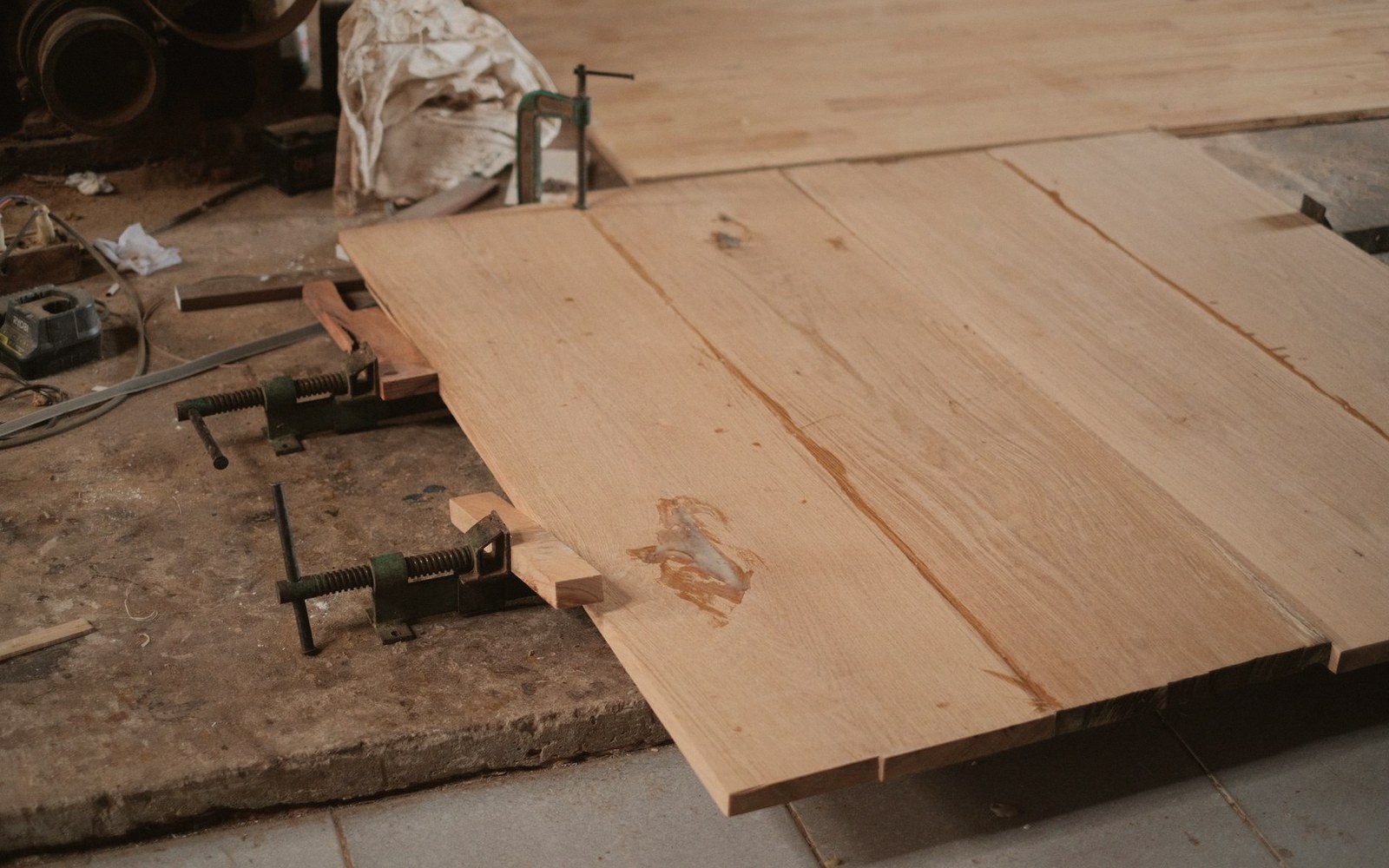
The support is the only layer that was once alive, and it never entirely stops behaving as though it still is.
Photo: Pew Nguyen / Pexels
Where the panel was always weakest
A panel rarely began as a single plank. Oak of the width needed for an altarpiece or a substantial portrait simply was not available in consistent quality, and even where it was, a wide board moves more than a narrow one. So the carpenter — the kistenmaker or joiner who supplied blank panels to Flemish and Dutch workshops — built the support from two, three, sometimes four boards, glued along their long edges and allowed to cure before the painter took delivery.
The glue was animal hide glue, the same material that bound the chalk ground laid on top. It is a strong adhesive under controlled conditions and a poor one the moment the humidity changes, because it absorbs moisture, swells, and then dries out again. Wood does the same thing, but not at the same rate or in the same direction. Oak never stops moving, and across the grain it moves considerably. Two boards joined edge to edge will try to move independently every time the relative humidity in a room shifts, and the glue line between them is where that tension is concentrated.
What the surface tells you
Stand close enough to a panel with a raking light — a lamp held nearly parallel to the surface — and joins that are invisible under normal lighting become obvious. The boards will have cupped slightly toward or away from each other, leaving a low ridge or a gentle valley running the full height of the picture. In quieter cases there is only a crack in the ground and paint: a long, near-vertical line tracking the seam with unsettling precision. The chalk and glue ground has no give; when the boards shift fractionally at the join, the ground shears first.
Older repairs tried to bridge the problem with wooden inserts — a spline or a butterfly key let into the back — or by planing the panel thinner to reduce its stiffness and then cradling it. Thinning redistributed the stress without resolving it; cradling introduced its own. Neither intervention eliminates the underlying movement, and both can make the join site more, not less, active over time.
What the join does not do, as a rule, is fail suddenly. It opens slowly, over decades or centuries, a millimetre of separation that becomes a visible step, then a gap into which loose ground falls. The paint crossing the seam is always the most vulnerable passage in the picture — the last to be consolidated securely, the first to show new losses after any change in storage conditions.
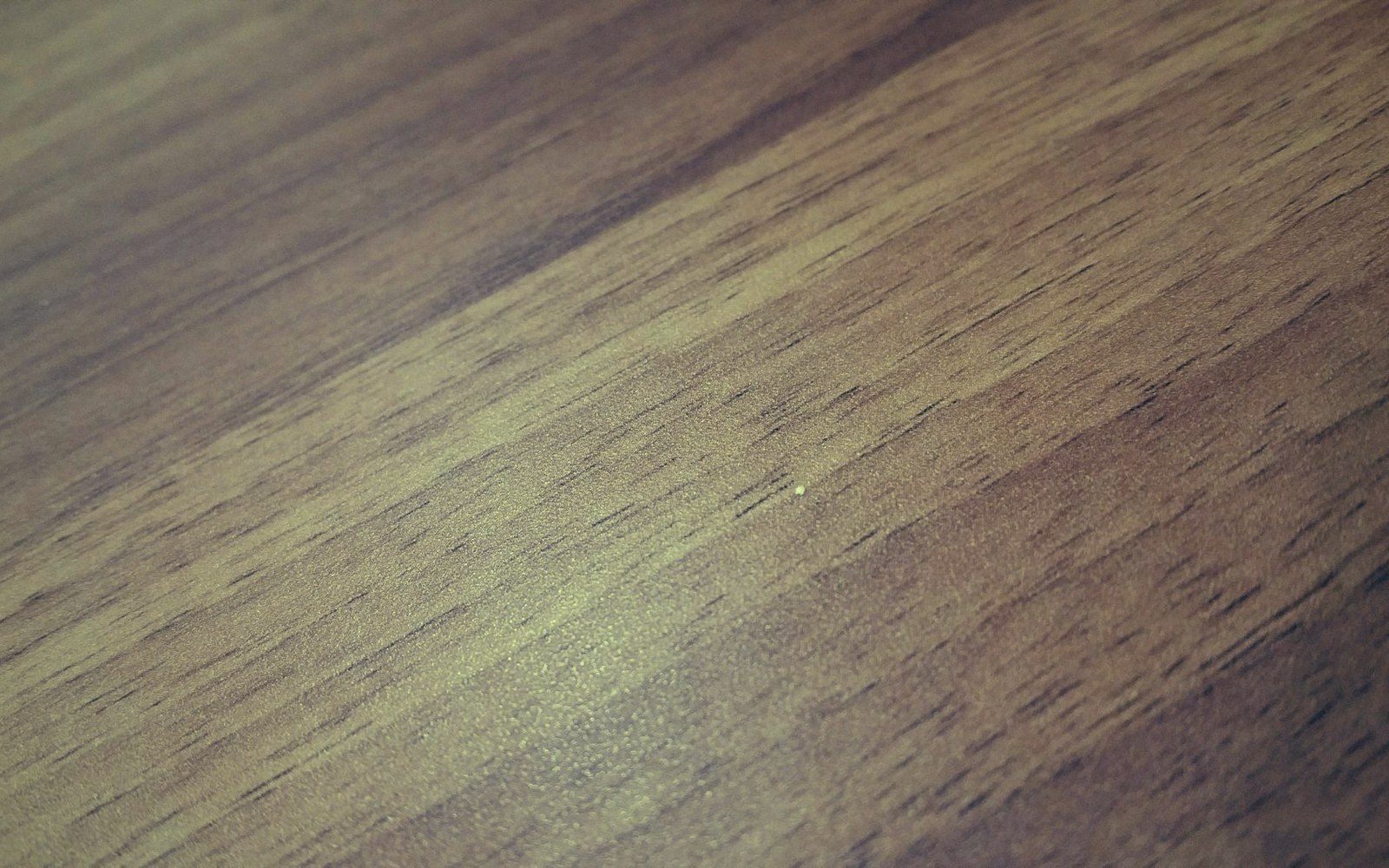
Two boards glued edge to edge. The glue is meant to be the weakest part of the assembly.
Photo: Digital Buggu / PexelsIn that narrow line, the whole argument about environmental control becomes concrete.
Oak of the width needed for an altarpiece or a substantial portrait simply was not available in consistent quality, and even where it was, a wide board moves more than a narrow one.
The physics in plain terms
Lifted out of the piece| hide glue | animal-derived adhesive used both in the join and in the chalk ground; sensitive to humidity |
| edge-to-edge join | boards glued along their long sides to make a panel of the needed width |
| raking light | lamp held nearly parallel to the surface to reveal surface relief invisible under normal lighting |
| cupping at the join | one board pulls slightly forward or back relative to its neighbour as humidity changes |
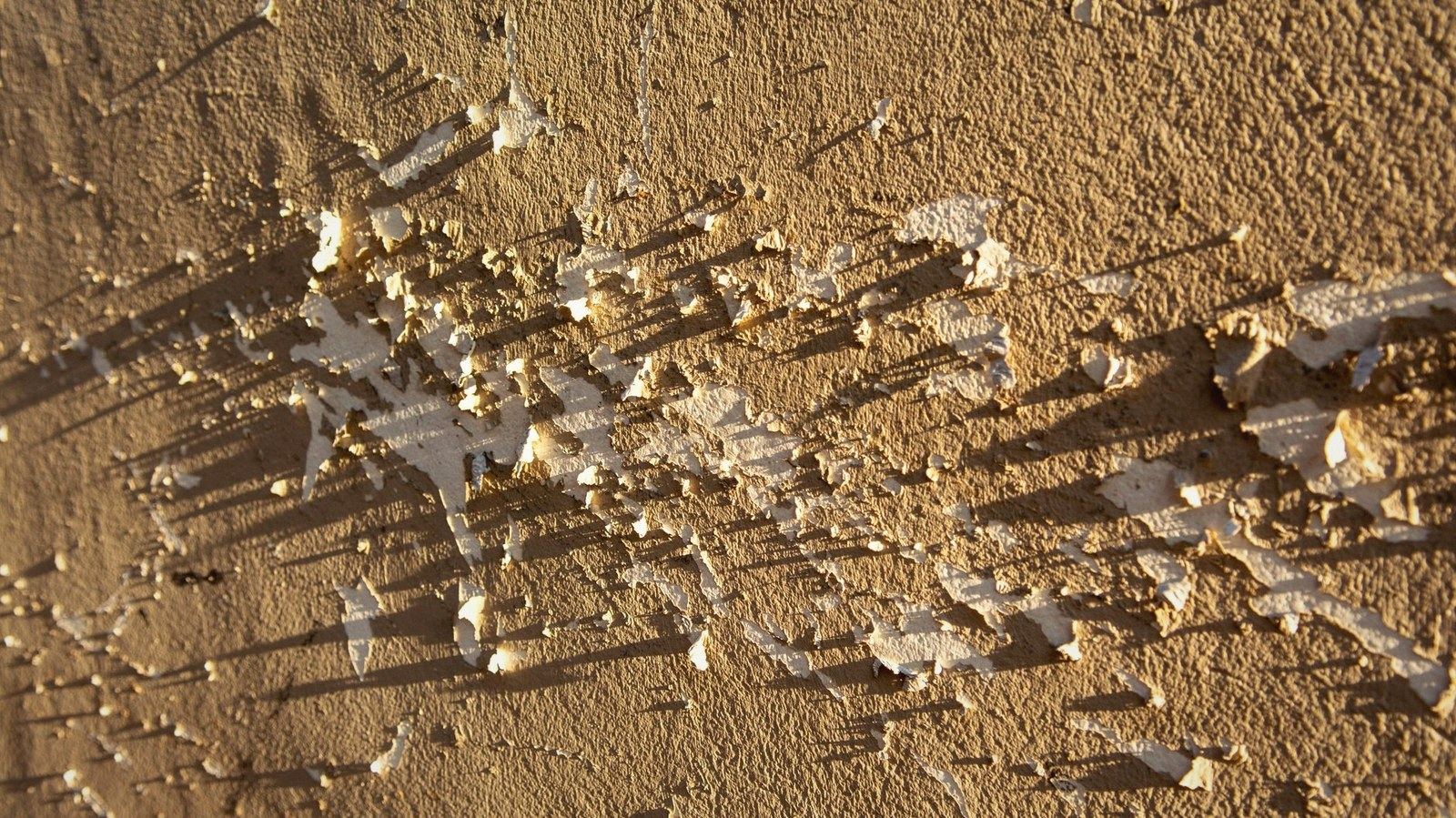
Raking light at a shallow angle turns every deformation in the surface into a shadow — cracks, cupping, and the ridge along a join all read at once.
Photo: Jan van der Wolf / PexelsWhat typically happens across four hundred years
Lifted out of the piece- Ground cracks first at the seamchalk layer has no elasticity and shears when boards shift
- A ridge or valley developsvisible in raking light long before it reads under normal lighting
- Paint over the seam is last to be stabilised and first to show fresh losses after environmental change
- Historical fixes (splines, thinning, cradling) redistributed stress without resolving the underlying movement