The cleaning window
A small rectangle of cleaned surface reveals more than any amount of looking from a distance.
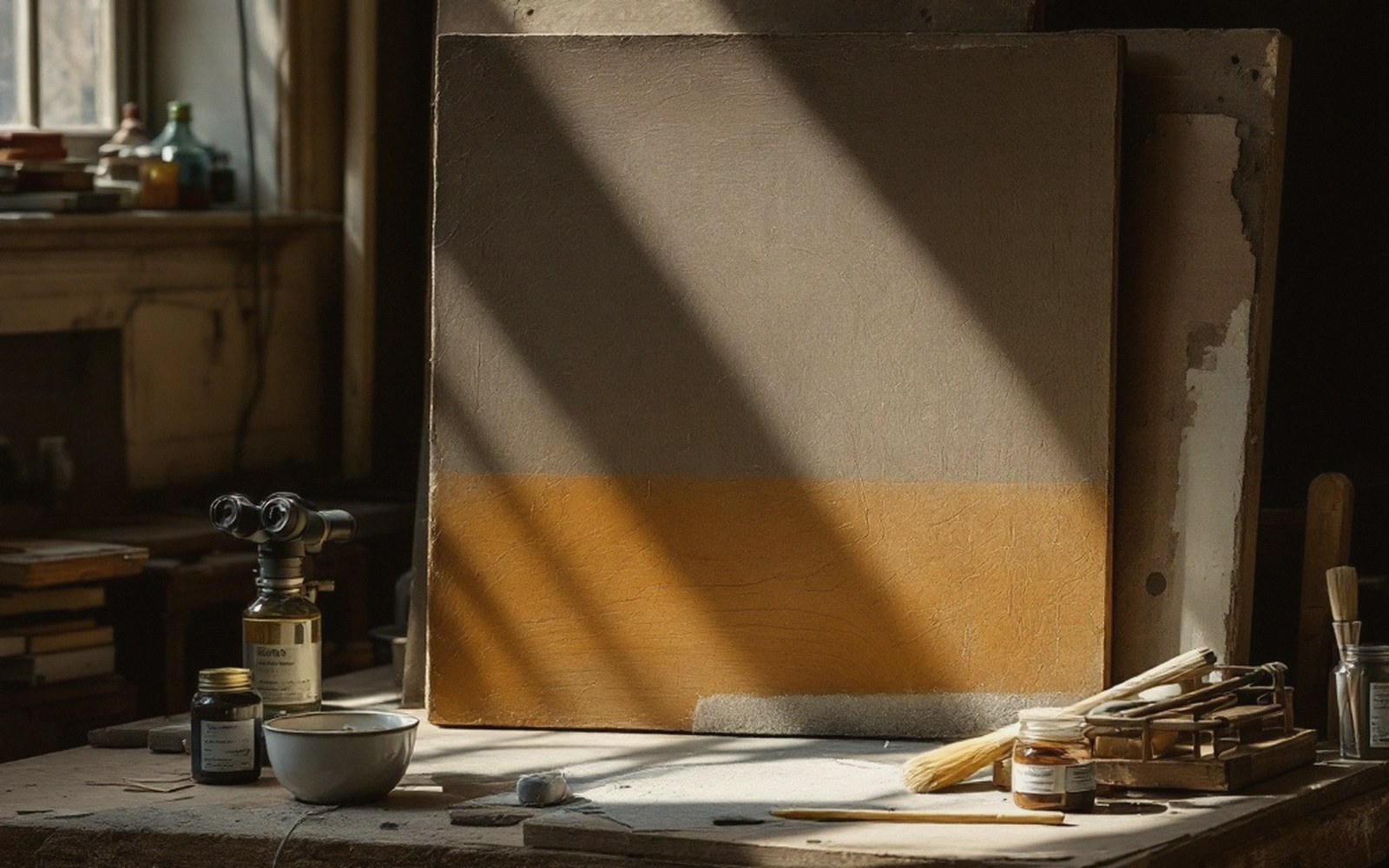
The coat that saturates the colours is also the coat that yellows, clouds, and gets into every crack.
Photograph supplied.
What a test clean tells you
Before any conservator commits to removing old varnish across an entire panel, they open a window — a small area, usually a centimetre or two wide, cleaned with a swab and the mildest solvent that achieves anything. The cleaned patch sits inside the dirty surface like a frame within a frame, and what it shows is diagnostic.
The first thing it proves is simply what the varnish is doing to the colour. A thick, yellowed resin coat absorbs blue and violet wavelengths selectively, so a window opened over a sky or a blue robe can be startling: what read as grey-green resolves into the actual pigment, cooler and lighter by several value steps. Because varnish yellows worst in the blues, this is where the test is most instructive.
The second thing is resistance. How the surface responds to the chosen solvent — whether the varnish softens cleanly, whether original paint films start to move, whether there is a later restoration layer sitting between old varnish and older varnish — all of this shows up immediately in a test clean and cannot be learned any other way. If two layers of varnish are present, the swab stops at the first; the conservator has to decide which layer she is working to, and the window makes that decision tangible before the choice is committed across the whole surface.
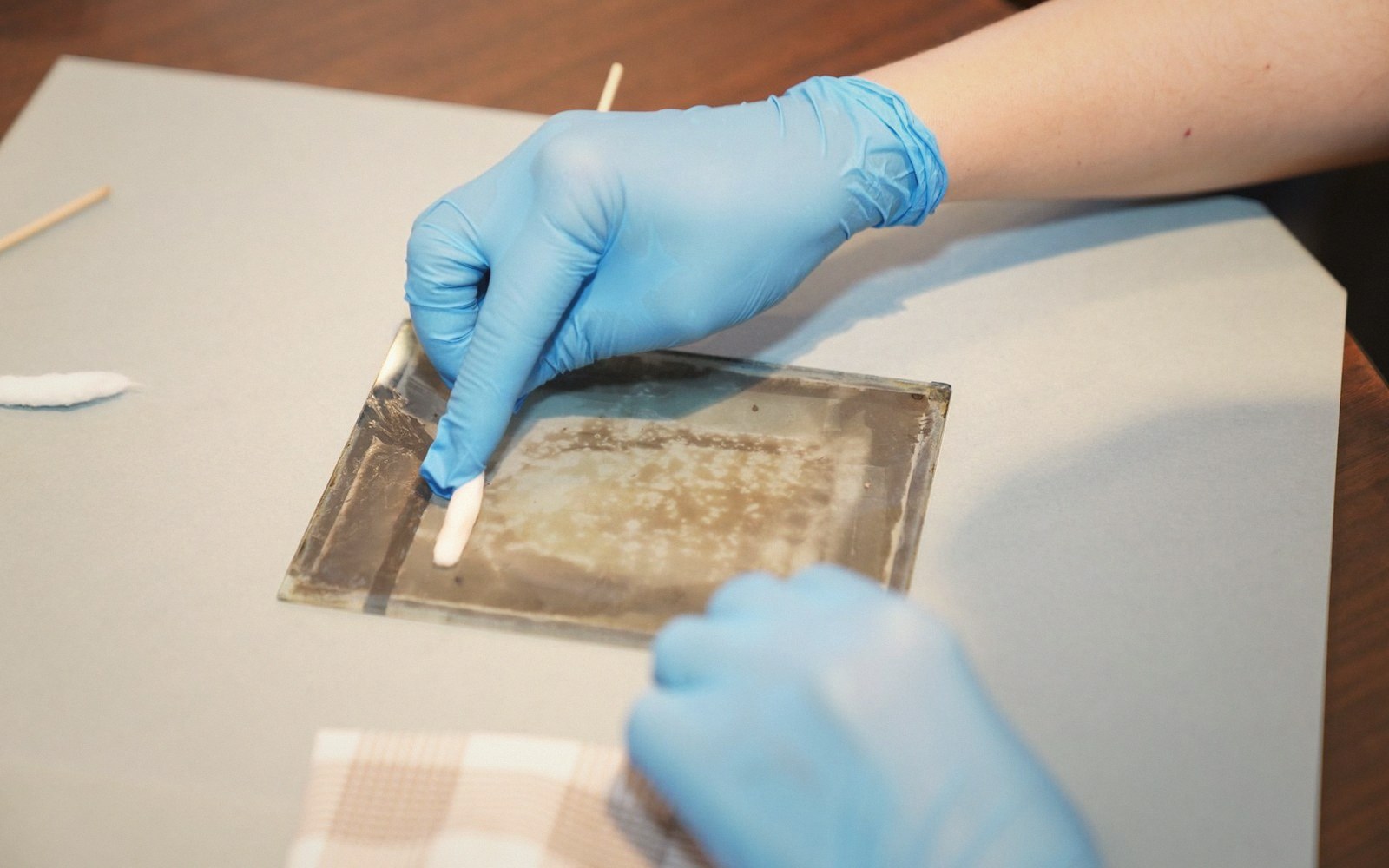
The cleaned patch cannot be unread. Once it is open, leaving the rest untouched is also a decision.
Photo: Tahir Xəlfəquliyev / PexelsThe third thing is condition. Raking light over the uncleaned surface gives one kind of reading; a clean patch under direct illumination gives another. Blanching, ground losses, old retouchings no longer masked by the varnish tint — the test clean exposes what lies beneath before anything is decided at scale.
The window is left open. It sits on the surface for days or weeks while the conservator looks, takes photographs under different light sources, and writes the treatment report. It is the evidence. Closing it prematurely — revarnishing before the decision is made — is the one thing no one does.
The cleaned patch sits inside the dirty surface like a frame within a frame, and what it shows is diagnostic.
What the test reveals, in sequence
Lifted out of the piece| Colour shift | how much the yellowed varnish was suppressing the original hue |
| Solvent response | which solvent achieves separation at the right layer without disturbing paint films beneath |
| Condition below | blanching, retouchings, ground losses previously masked by the varnish tint |
The mildest solvent system that has any effect at all, applied on a swab smaller than a thumbnail.
Photo: Tara Winstead / Pexels