How far to take it off
Old varnish is yellow, uneven and sometimes the only thing holding a surface together. The cleaning window, and the judgement it forces.
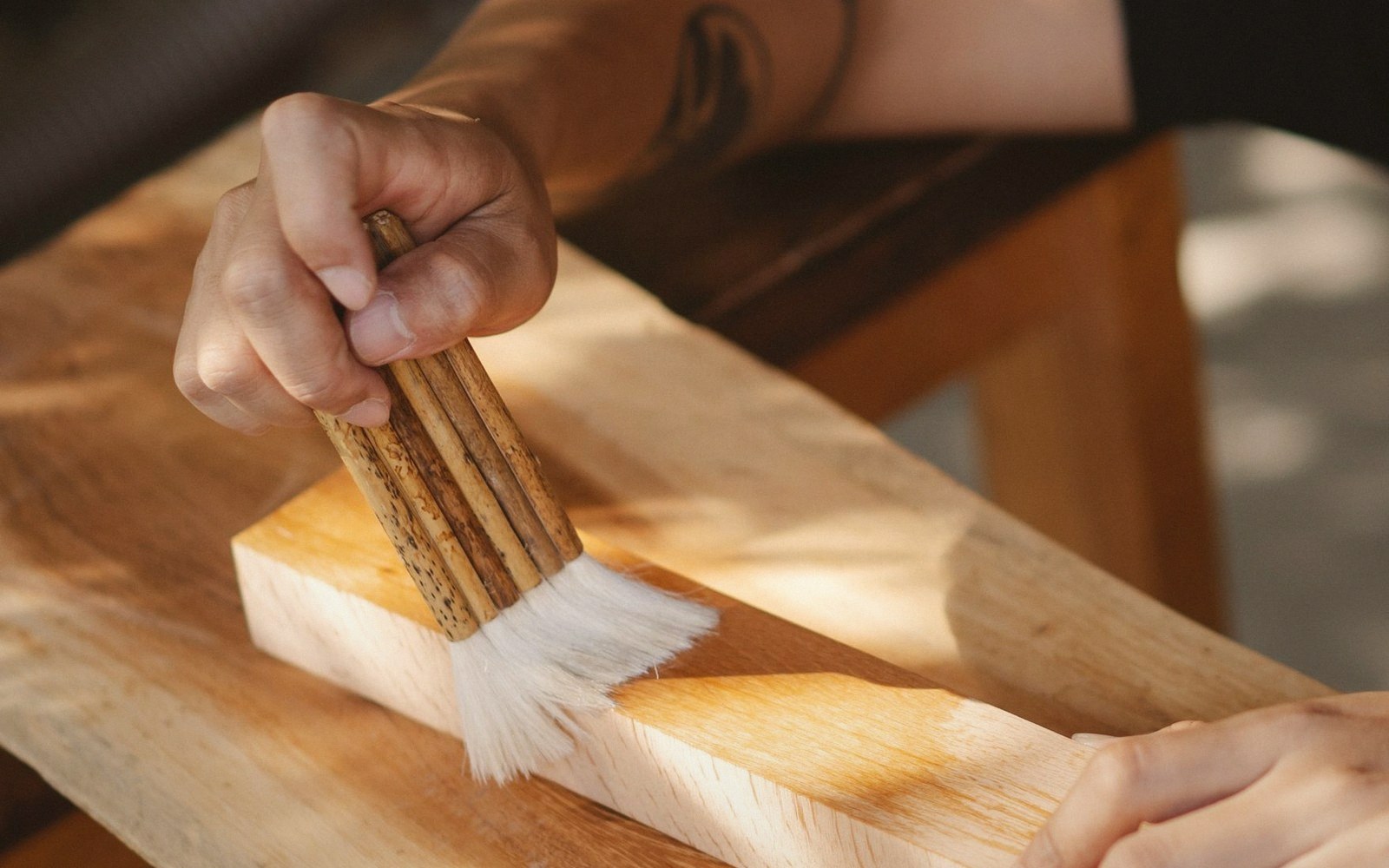
The coat that saturates the colours is also the coat that yellows, clouds, and gets into every crack.
Photo: Ono Kosuki / Pexels
The varnish you inherit, and the question it asks
Old varnish is not a single thing. It may be a single campaign of natural resin applied a century ago, or it may be four centuries of campaigns — each painter's original coat, the restorer who cleaned and revarnished in the eighteenth century, another intervention in the nineteenth, a touch of synthetic consolidant applied somewhere in the twentieth. These layers sit on top of each other and, under ultraviolet light, they fluoresce differently: the older natural resins glow greenish-yellow, more recent additions appear dull or dark. That fluorescence is not a cleaning map, but it is the first honest read of the situation.
The yellowing is optical, not poetic. Natural resins — damar, mastic, the old stand-bys — oxidise over time, and the compounds that form absorb the short-wave end of the visible spectrum. Blues lose their value most dramatically, because the short wavelengths a blue pigment reflects are the very ones the yellowed varnish absorbs most. A painting cleaned of old varnish can look as though someone has turned up a dimmer switch: the blues come back, the lights return to their proper lightness. What was a muddy interior scene can resolve into a painting built on a cool, deliberate palette.
But the varnish that yellows is also the varnish that got into the cracks, settled over every texture, and sometimes forms the only barrier between flaking paint and open air. This is the situation that demands the most sober judgement in conservation: you are standing in front of something fragile, working with a swab smaller than your thumbnail, and you have to decide not just whether to remove the varnish but how much.
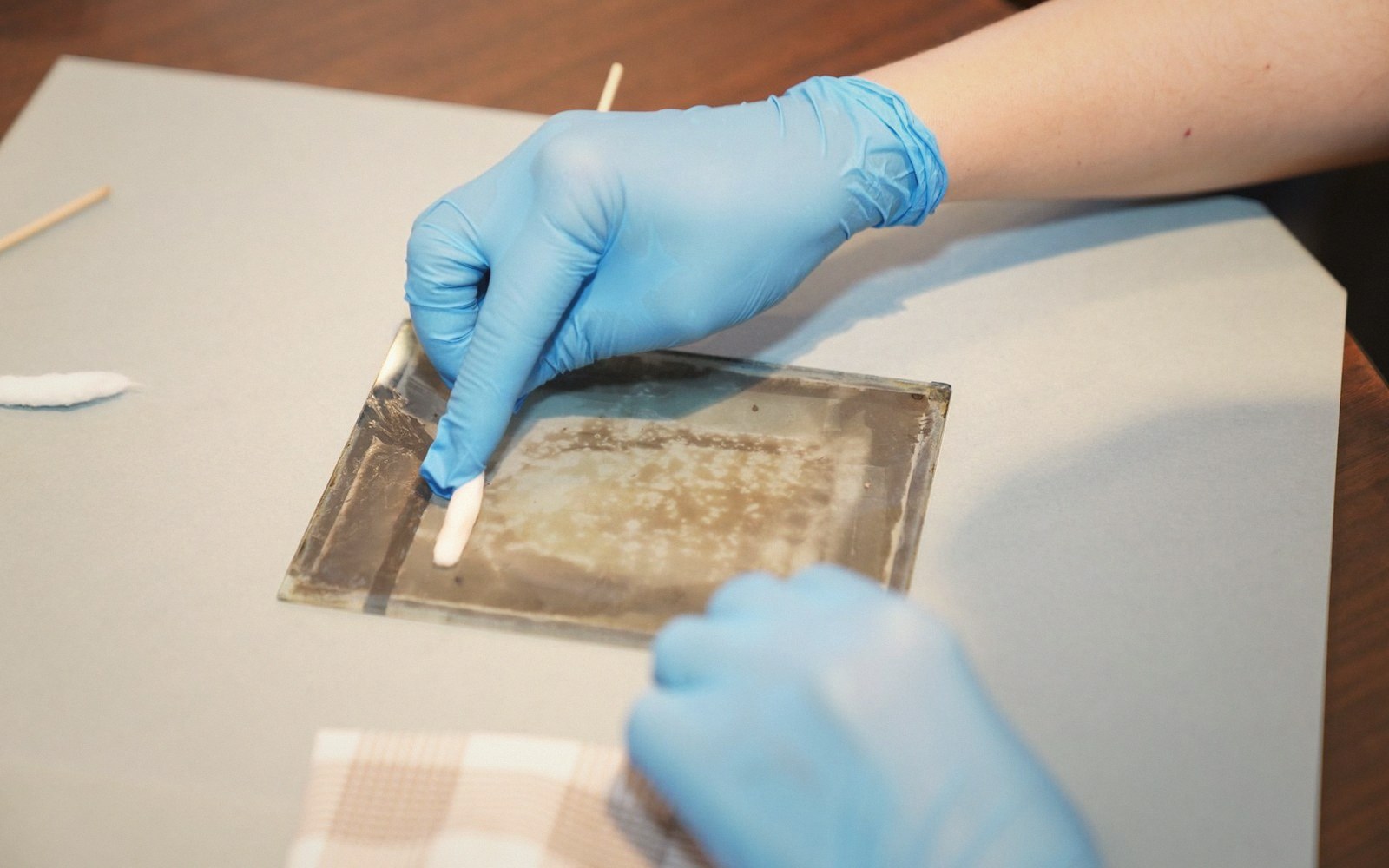
The cleaned patch cannot be unread. Once it is open, leaving the rest untouched is also a decision.
Photo: Tahir Xəlfəquliyev / PexelsThe cleaning window as proof
The cleaning window is the instrument of that decision. A conservator opens a small test area — usually somewhere already protected from view, or in a region of the composition where minor risk is acceptable — and takes the surface back in controlled steps using the mildest solvent system that has any effect at all. The window shows what the painting looks like without the accretion, and it shows whether the paint underneath is stable enough to tolerate what is happening to it. It also forces a commitment to a position, because the cleaned patch cannot be unread: the contrast between it and the surrounding discoloured surface now makes total inaction look like a choice too.
Full removal of all varnish layers is not a given. Partial cleaning — taking the surface back to a more recent but still discoloured layer, stopping before an earlier and more stable coat — is a legitimate outcome, and sometimes the right one. The judgment rests on several converging questions: Is the paint film stable? Are there known vulnerable pigments — smalt, azurite, certain glazes — that thin solvents might disturb before the resin is gone? Is the existing varnish so cross-linked by age that effective removal would require concentrations that are unsafe for everything underneath? And critically: has anyone been in here before, and are the retouchings and fills of a previous campaign sitting in the varnish you are trying to remove?
That last question shapes many decisions in practice. Old retouching tends to be bound in oil or resin, sitting at roughly the same solubility level as the varnish you are targeting. Take the varnish off and the previous restorer's work may come with it — revealing a loss that now needs to be addressed again, differently. Or it may reveal that the previous work was extensive, changing what anyone understood about the condition of the original paint beneath.
These layers sit on top of each other and, under ultraviolet light, they fluoresce differently: the older natural resins glow greenish-yellow, more recent additions appear dull or dark.
Stopping as a decision
What stops the work is not purely practical. There is an argument made in conservation — seriously, with real stakes — that to remove every trace of old varnish is to remove the record of how the painting was seen across centuries. An eighteenth-century coat is evidence. The counterargument is that obscured paint is not accessible to anyone: the viewer sees the varnish, not the painting. Neither position is simply right.
What the cleaning window does, in the end, is make the argument physical. It turns a theoretical question about the right degree of intervention into something you can see with your own eyes — the difference between what is there and what has been sitting over it for a very long time.
What is at stake in the decision
Lifted out of the piece- Yellowing chemistrywhy natural resins oxidise and which pigments suffer most
- Multiple varnish campaignseach restoration adds a layer; UV fluorescence reads them differently
- The cross-linked varnish problemold resin becomes harder to dissolve safely over time
- Old retouching caught in varnish layersremoving one can expose or destroy the other
- Partial cleaning as a deliberate, defensible endpoint, not a compromise
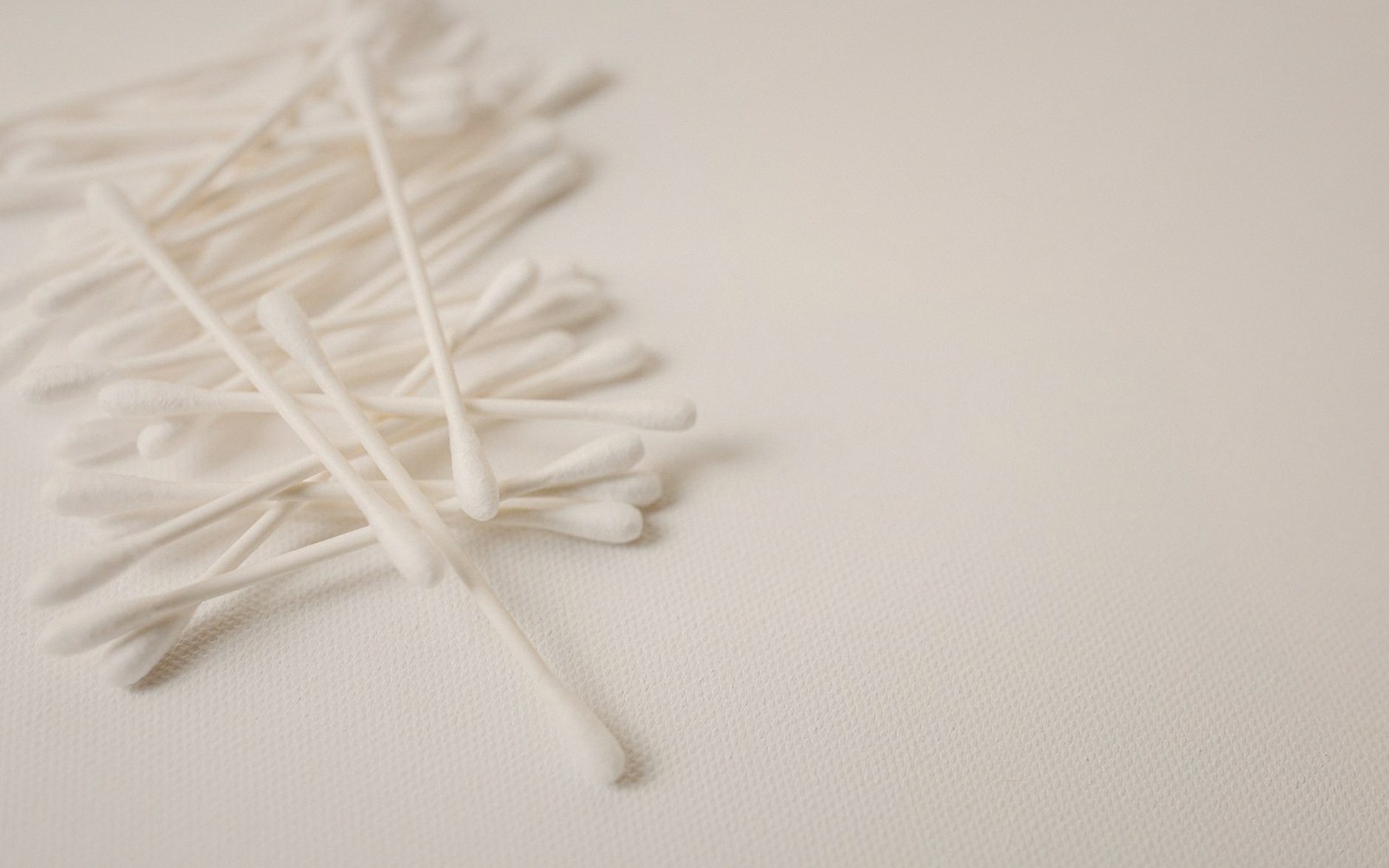
The mildest solvent system that has any effect at all, applied on a swab smaller than a thumbnail.
Photo: Tara Winstead / PexelsThe two competing arguments
Lifted out of the piece- Full removal gives back the original palette; leaves no evidence of centuries of viewing
- Retaining old varnish preserves conservation history; leaves the paint less legible
- The cleaning window makes the argument concrete: it cannot be ignored once opened