Solvent and swab
The conservator begins at the weakest point: a cotton swab, a mild solvent, a single test patch. Everything else follows from what that patch reveals.
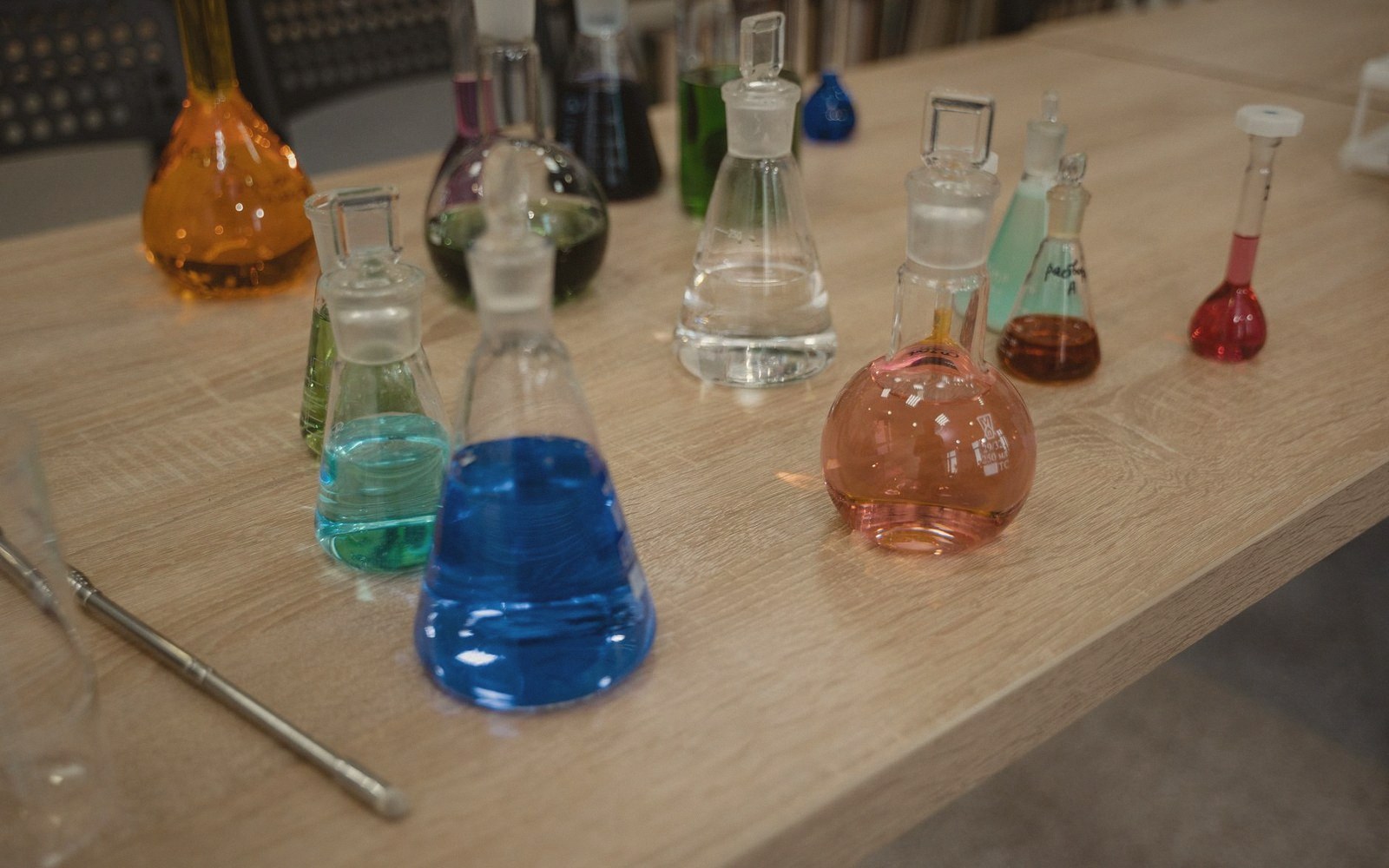
The coat that saturates the colours is also the coat that yellows, clouds, and gets into every crack.
Photo: Tima Miroshnichenko / Pexels
The logic of starting gentle
Old varnish does not come off in sheets. It comes off in small circles of amber-stained cotton, one swab at a time, and the process begins not with the most effective solvent available but with the least. This is not timidity — it is method. Every layer on a panel painting exists on a continuum of solubility, and a solvent strong enough to lift aged natural resin is often strong enough to lift a glaze laid on top of the ground centuries ago. The conservator's problem is that those two layers can be separated by less than a tenth of a millimetre.
Natural resin varnishes — dammar, mastic — polymerise and cross-link as they age, becoming progressively less soluble than they were when first applied. A varnish that petroleum spirit would have removed in the seventeenth century may resist it entirely after four hundred years and demand something appreciably more active: an aromatic solvent, an ester, or a carefully buffered aqueous mixture. The question of how far to take the varnish off is therefore entangled with the question of what removing it requires, because a more active solvent compresses the margin of safety.
The swab disciplines all of this. A small plug of cotton wool rolled onto a wooden stick, moistened — not soaked — with the test solvent, applied with a rolling action rather than a scrubbing one. The rolling motion matters: it lifts material away from the surface rather than working it back in. What comes up on the swab tells you the solvent's reach. What the surface looks like under raking light tells you whether you are staying above the paint film or beginning to enter it. A colour on the swab that is not amber-brown is a warning.
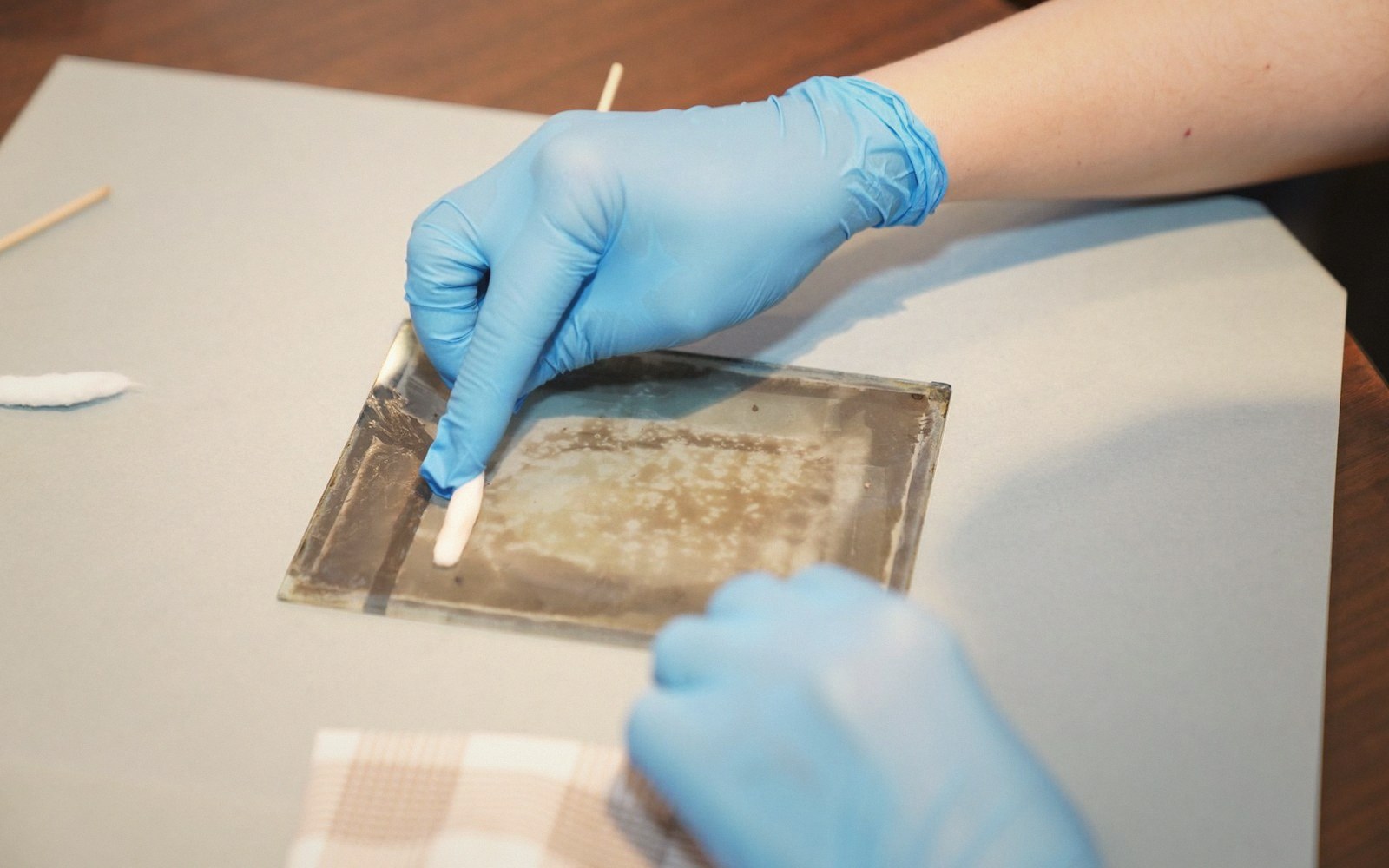
The cleaned patch cannot be unread. Once it is open, leaving the rest untouched is also a decision.
Photo: Tahir Xəlfəquliyev / PexelsSwab by swab, the cleaning window opens — a small rectangle of recovered surface against which the unworked surround can be read. A lean, pale sky. A shadow passage that looked grey under the yellowed varnish and is, underneath, a layered blue-green. The window does not just show cleanliness; it shows whether cleaning is the right decision at all. Some surfaces, disturbed by previous campaigns of cleaning and retouching, are better left.
The swab is slow. Across a large panel it takes weeks. That slowness is its virtue: it makes impulsive decisions structurally impossible.
It comes off in small circles of amber-stained cotton, one swab at a time, and the process begins not with the most effective solvent available but with the least.
The tools and materials
Lifted out of the piece| Cotton swab | rolled plug of cotton wool on a wooden stick; the standard instrument of varnish removal |
| Dammar, mastic | natural resin varnishes that cross-link with age and become harder to dissolve |
| Petroleum spirit | a mild hydrocarbon solvent; often the starting point in a cleaning test |
| Rolling action | swab technique that lifts material rather than abrading the surface |
| Test patch | the first small area worked, used to calibrate solvent strength before proceeding |
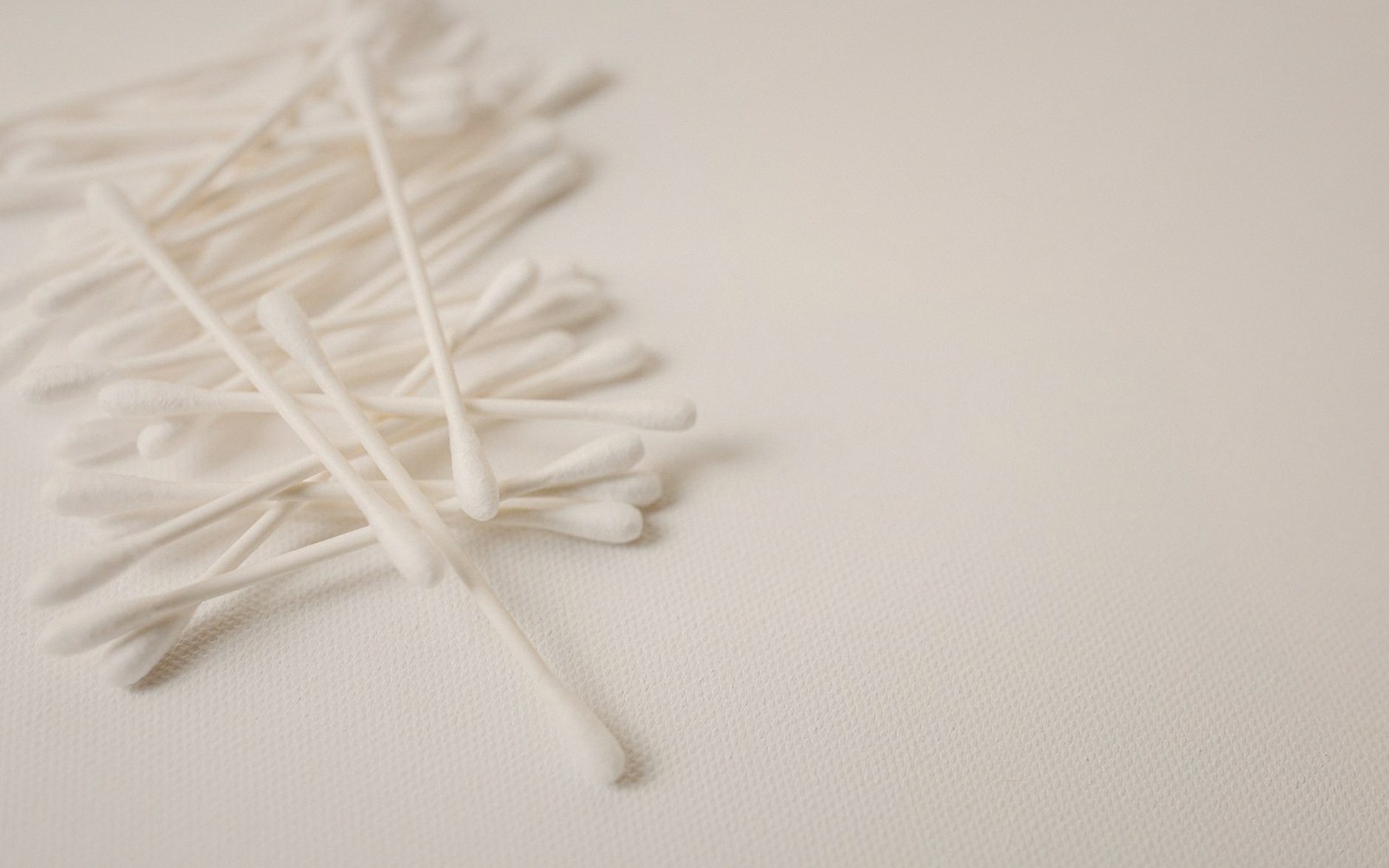
The mildest solvent system that has any effect at all, applied on a swab smaller than a thumbnail.
Photo: Tara Winstead / Pexels