Retouching
The retouch should be invisible to the eye and visible under ultraviolet. That is the whole discipline in one sentence.
The coat that saturates the colours is also the coat that yellows, clouds, and gets into every crack.
Photo: Lean Leta / Pexels
The Three Rules That Govern Every Brush Stroke
A loss in a painting — a place where ground and paint have gone — is not restored so much as quietened. The conservator's job is to stop the eye snagging on a white or grey void without pretending the loss never happened. Three principles govern how that is done, and they have been standard in professional practice for decades: the retouch must be reversible, it must be distinguishable from original paint, and it must be confined strictly to the area of loss. Cross any of those lines and what was conservation becomes something closer to forgery.
Reversibility means the material chosen to fill colour back in can be removed without touching what survives. The fillers used to level a loss — typically a stable bulking agent — are chosen on the same grounds. Over them, conservators most often work with watercolours, gouache, or purpose-made conservation paints such as Gamblin Conservation Colors or the Maimeri Restauro range, all of which dissolve in solvents mild enough to lift the retouch without disturbing aged original paint beneath. Natural resin varnishes have also been used as a medium for dry pigments, and they have been popular because they behave predictably under varnish removal decades later.
Distinguishability is the rule that separates conservation from deception. Under ultraviolet light, original aged paint fluoresces differently from any modern material — the retouch, however well matched in daylight, appears dark against the surrounding glow. This is not a defect; it is intentional. Any future examiner, any auction specialist, any conservator decades hence can immediately map what is original and what is not. The retouch is designed to fail that test, in exactly the right way.
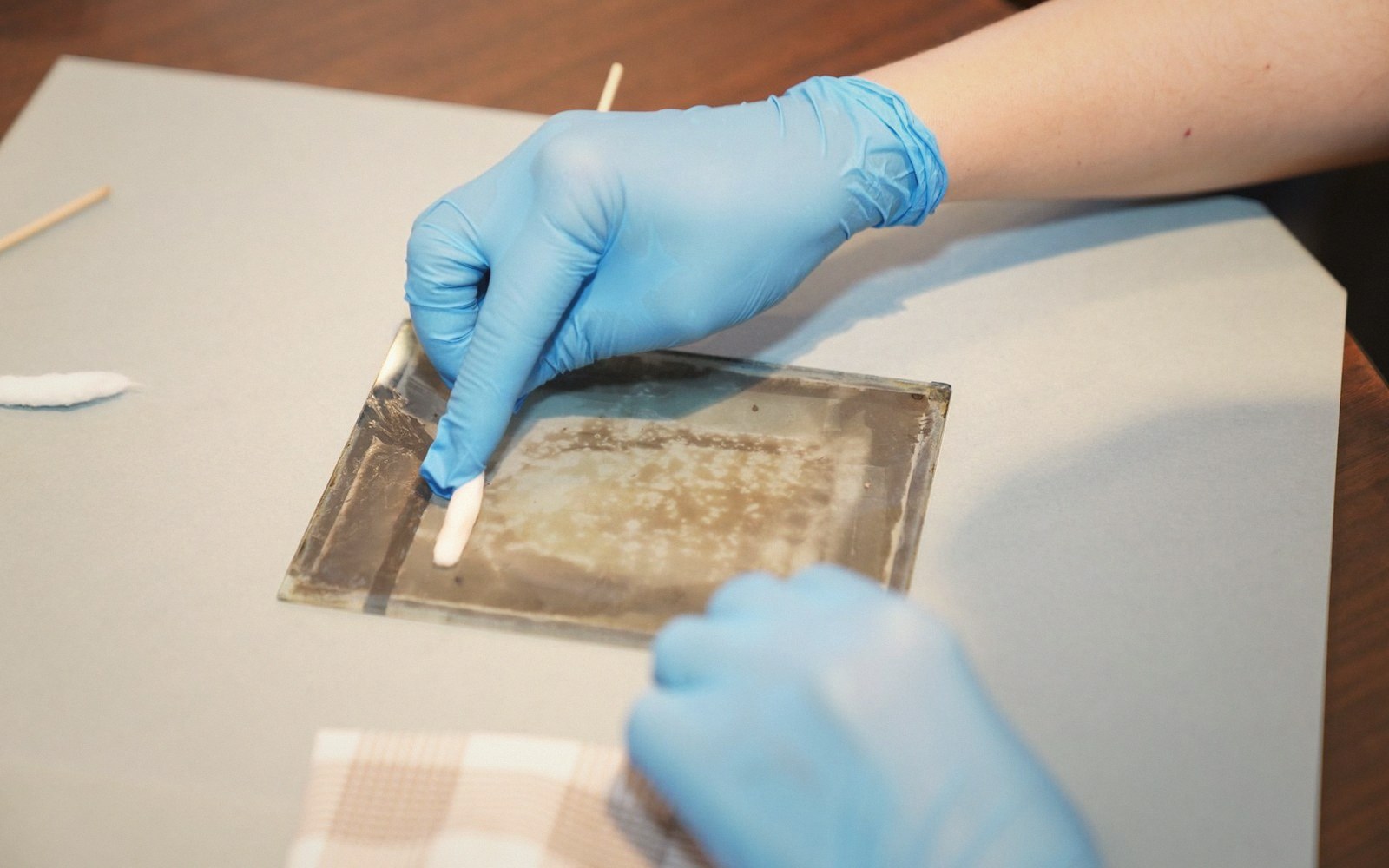
The cleaned patch cannot be unread. Once it is open, leaving the rest untouched is also a decision.
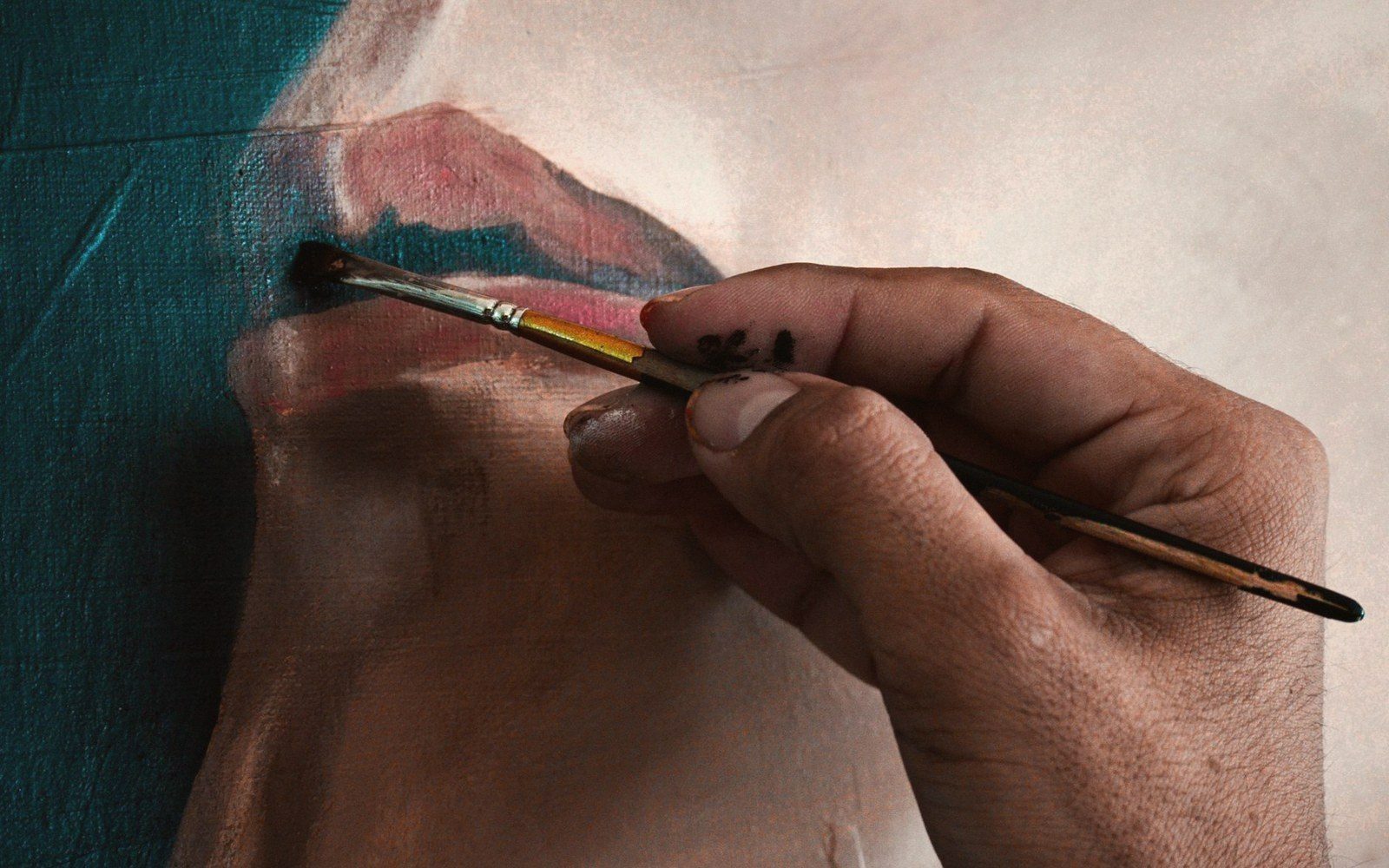
Photo: Tahir Xəlfəquliyev / PexelsConfinement is where skill is most visibly tested. The brush goes only where the ground is absent. Even a stroke that grazes onto intact original paint is an overreach — it covers something that did not need covering, and removing it later risks the original surface underneath. In practice this means working under magnification, often a stereomicroscope, building colour in thin layers to avoid an opaque patch that reads as flat against the texture of old paint around it. The aim is optical integration: the loss becomes a neutral presence rather than an absence, and the surrounding paint carries the reading of the surface.
Retouching is always the last stage before a final varnish coat is applied, and it is never permanent in intention. The materials are chosen precisely so that the next conservator, arriving with better methods or a fuller picture of the original, can take the work further without inheriting damage.
A loss in a painting — a place where ground and paint have gone — is not restored so much as quietened.
The three governing principles
Lifted out of the piece| Reversibility | the retouch can be removed without disturbing original paint |
| Distinguishability | visible as modern material under ultraviolet light |
| Confinement | brush goes only into the area of loss, never onto surviving original |
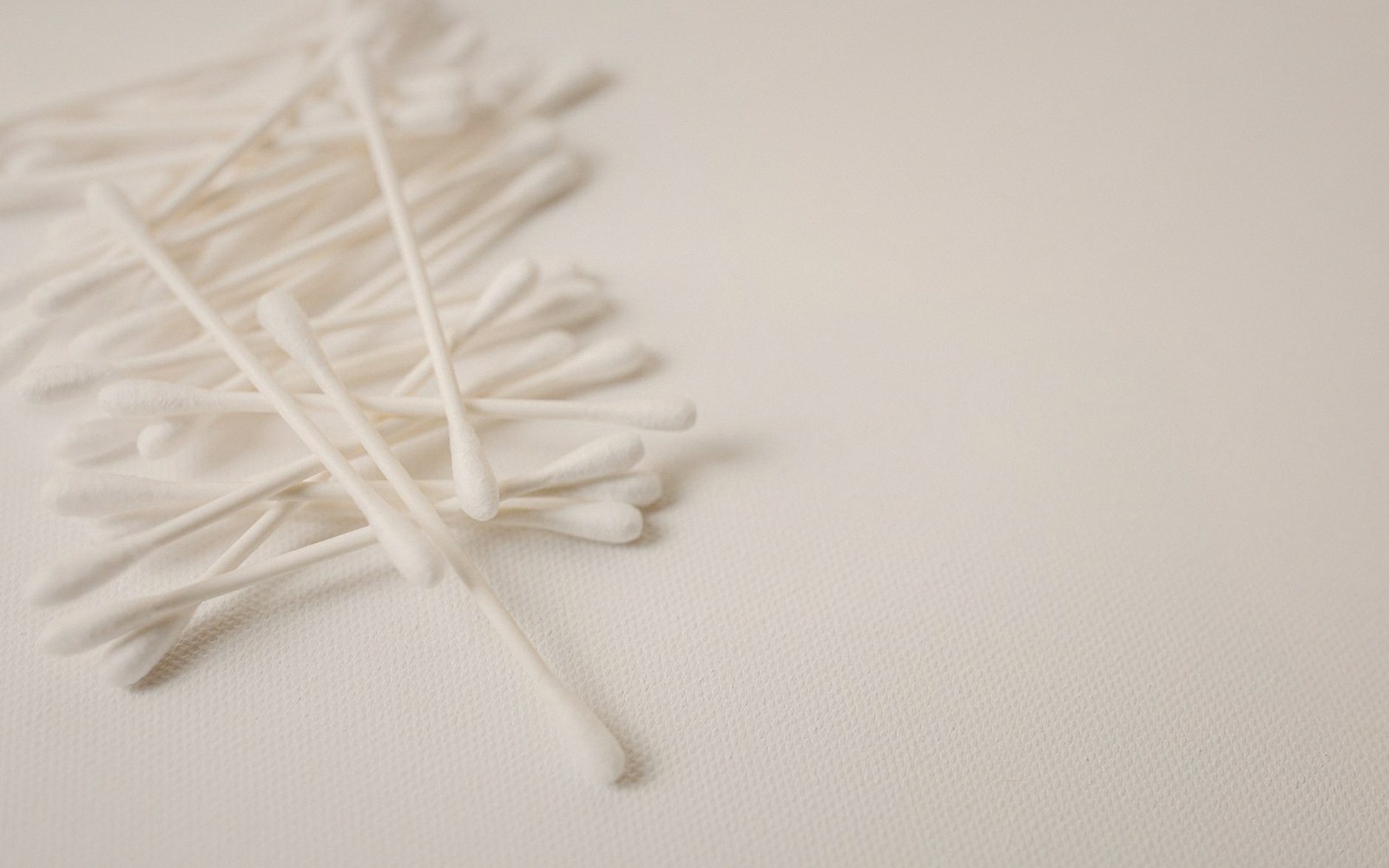
The mildest solvent system that has any effect at all, applied on a swab smaller than a thumbnail.
Photo: Tara Winstead / PexelsMaterials mentioned
Lifted out of the piece| Watercolours and gouache | traditional, water-soluble retouch media |
| Gamblin Conservation Colors | purpose-made conservation paint, solvent-reversible |
| Maimeri Restauro | Italian equivalent, similar reversibility profile |
| Natural resin varnishes | used as a binding medium for dry pigments; historically popular |