Cupping and flaking
When the paint surface turns against the ground beneath it, every flake is a clock counting down.
Damage is legible. What it looks like tells you which force caused it, and roughly when.
Photo: The Street railway journal (1900) · Wikimedia Commons
Why Paint Lifts
A Dutch panel from the seventeenth century is not a stable object. It is a layered system — oak support, chalk-and-glue ground, lean and fat paint layers, resin varnish — in which each material responds differently to heat and humidity. The ground expands and contracts along one axis; the paint film, increasingly rigid with age, resists. Something has to give. What gives, over decades, is adhesion.
The earliest sign is cupping: the edges of small paint islands curl upward, away from the ground, while the centre stays reluctantly attached. Seen in raking light — a lamp held almost parallel to the surface — it resolves into a landscape of tiny raised ridges and shadowed valleys that the eye reads as texture but the fingertip would feel as brittleness. These lifted edges are the danger zones. They are no longer bonded; they are only resting.
The mechanics are worth understanding. Chalk and glue ground is hygroscopic — it absorbs and releases moisture freely. The paint layer above it, particularly one rich in lead white, is far less responsive. When the panel loses moisture in a dry environment, the ground contracts and the paint cannot follow in kind. The chalk layer cups downward at the panel surface; the paint cups upward at its own. The result is a corrugated failure, the crack network acting as the grid along which the failure organises itself. Once the edges of a paint island rise, air gets under them. The contact between ground and paint is broken, and no environment can put it back.
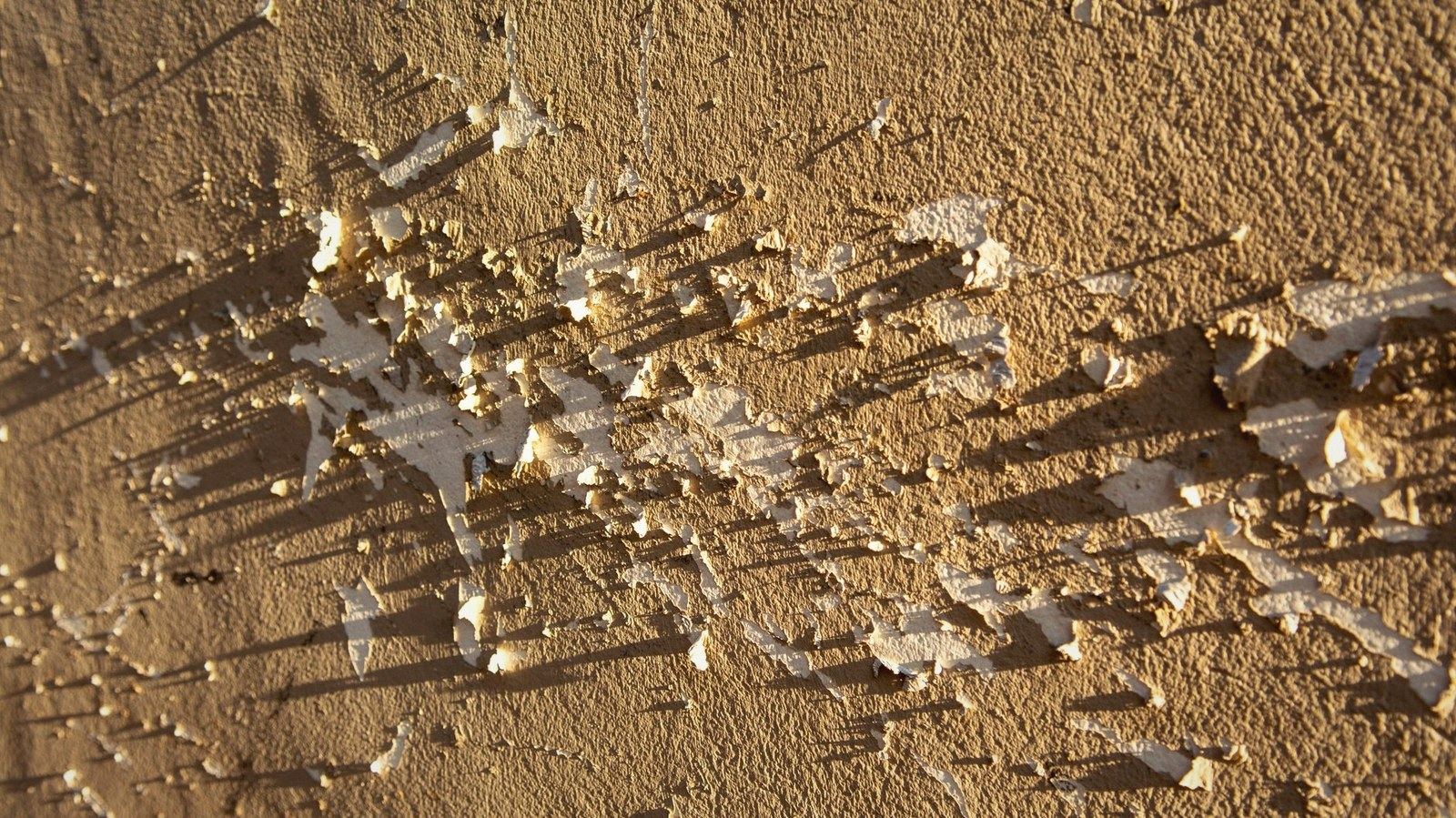
Raking light at a shallow angle turns every deformation in the surface into a shadow — cracks, cupping, and the ridge along a join all read at once.
Photo: Jan van der Wolf / PexelsThe Consolidation Argument
Consolidation — the introduction of an adhesive to re-bond lifted paint to its ground — is the standard response, but it is not a simple one. The conservator's first obligation is to choose an adhesive that can be reversed: one that a future conservator, using appropriate solvents, can remove without damaging what is underneath. Sturgeon glue, animal skin glue and synthetic resins have all served in this role; each has its advocates and its failure modes. Sturgeon glue has a long track record in European conservation and remains widely used for small, discrete areas of lifting. It is introduced by brush or by micro-syringe, the lifted flake is laid down under a warmed spatula through a sheet of silicone-release paper, and light pressure holds it while the adhesive sets.
The second obligation is to disturb as little as possible. Every intervention on a cupped and flaking surface risks detaching paint that is still, barely, attached. Flakes that lift suddenly — during transit, during cleaning, in response to a radiator being turned on in an ill-regulated store — can be lost permanently. This is why the decision to consolidate is never casual, and why the work is done in campaigns: the conservator identifies the most urgent areas under magnification, works methodically through them, and leaves stable zones alone.
There is a deeper problem. Consolidation addresses the symptom — the lifted flake — but not the underlying instability. If the panel continues to cycle through wide swings of humidity, new cupping will develop at new locations, because the structural mismatch between ground and paint has not changed. This is why conservators treat consolidation as inseparable from environmental stabilisation: the panel needs to live in conditions where relative humidity stays within a narrow band. Treatment without the right environment is a postponement, not a cure.
It is a layered system — oak support, chalk-and-glue ground, lean and fat paint layers, resin varnish — in which each material responds differently to heat and humidity.
Old consolidation campaigns — some carried out in the nineteenth or early twentieth century — used adhesives now known to be problematic: wax-resin mixtures, for instance, which can blanch and which leave a characteristic greasy appearance in transmitted light. Where earlier consolidants have hardened and yellowed, they can actually impede future treatment. Reading a panel's surface means reading its treatment history alongside its damage history, and the two are not always easy to separate. A cupped edge that resists laying down may be resisting because the ground is weak; it may equally be resisting because something applied decades ago has set like cement. Raking light shows you the topography. It does not tell you why.
What consolidation cannot do is restore the original adhesion — that is gone. What it can do, done carefully and maintained in the right conditions, is arrest the count.
What the damage looks like
Lifted out of the piece| Cupping | paint islands whose edges have lifted away from the ground, visible as raised ridges in raking light |
| Flaking | the terminal stage: a cupped island detaches entirely, leaving bare ground or bare wood |
| Raking light | a lamp held nearly parallel to the surface; the diagnostic tool for reading relief in a paint film |
| Crack network | the grid of age cracks that defines the boundaries of individual paint islands; cupping organises along it |
Most of the examination happens before anything at all is touched.
Photo: Artem Podrez / PexelsWhat consolidation involves
Lifted out of the piece| Consolidant | an adhesive introduced to re-bond a lifted flake to its ground; must be reversible by future conservators |
| Sturgeon glue | a traditional consolidant with a long track record in European panel conservation; used for small discrete areas |
| Wax-resin | an earlier consolidant now regarded as problematic; can blanch and resist later removal |
| Micro-syringe / warmed spatula / silicone-release paper | the physical kit for introducing adhesive and laying a flake down without further damage |
| Environmental stabilisation | keeping relative humidity within a narrow, steady band; consolidation without it is a postponement |