Damage is legible. What it looks like tells you which force caused it, and roughly when.
Photo: Pixabay / Pexels
What you are actually seeing
Press a finger against a blanched area and the haze does not shift. Breathe on it and it may temporarily darken — which tells you something is happening in the microstructure of the paint film rather than sitting on its surface. Blanching is a scattering effect: light that should pass through a transparent or semi-transparent layer is instead being redirected by tiny voids, cracks, or emulsified droplets too small to see individually but large enough collectively to turn a passage milky.
The causes group into two families. The first is mechanical: old varnish or a paint medium that has developed a fine internal crack network, often from repeated expansion and contraction, scatters light in exactly the way a sheet of cracked glass does compared to an intact one. The second is chemical: moisture drawn into a resin varnish — either during cleaning with a water-based solvent or from prolonged damp storage — can cause it to emulsify. The resin separates into microscopic droplets suspended in absorbed water, and the surface turns white. This moisture-driven form is sometimes reversible; a conservator may find that a careful reduction of humidity, or light consolidation, will improve or resolve it. The mechanical form is less forgiving.
What blanching is not: it is not surface bloom (a waxy or fatty exudate that sits on top and can often be reduced by gentle means), and it is not simply a dirty varnish. Those distinctions matter because the wrong response makes the problem worse. A conservator confronted with a blanched passage under raking light will first establish which layer is affected — varnish, medium, or ground — before deciding whether any intervention is warranted.
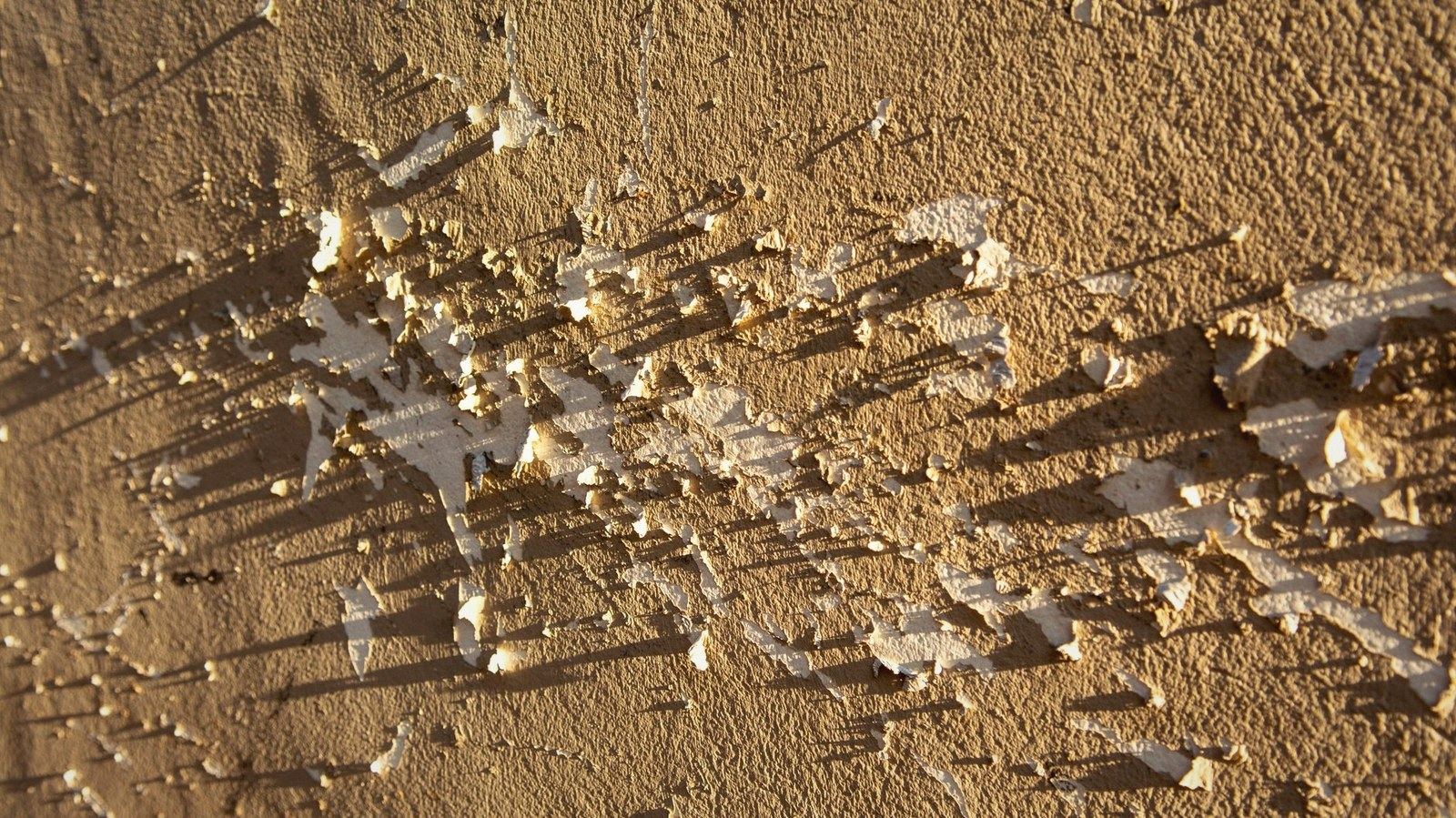
Raking light at a shallow angle turns every deformation in the surface into a shadow — cracks, cupping, and the ridge along a join all read at once.
Photo: Jan van der Wolf / PexelsIn Dutch seventeenth-century panels, blanching appears most often in glazes built thin over a pale ground, where the optical depth of the layer system depends entirely on transparency. Once that transparency is compromised, the luminosity the painter built up — sometimes across many sessions — is gone. It cannot be cleaned back. That is the limit the diagnosis marks.
Breathe on it and it may temporarily darken — which tells you something is happening in the microstructure of the paint film rather than sitting on its surface.
What can and cannot help
Lifted out of the piece| Temporary darkening when breathed on | diagnostic sign that the problem is in the microstructure, not on the surface |
| Moisture-driven blanching | sometimes partially reversible with careful environmental control |
| Mechanical blanching | internal crack network; less likely to improve |
| Bloom | a different, surface-level phenomenon; not blanching |

Most of the examination happens before anything at all is touched.
Photo: Artem Podrez / Pexels